

Agent Handoff Vs Tool Calling In AI Workflows
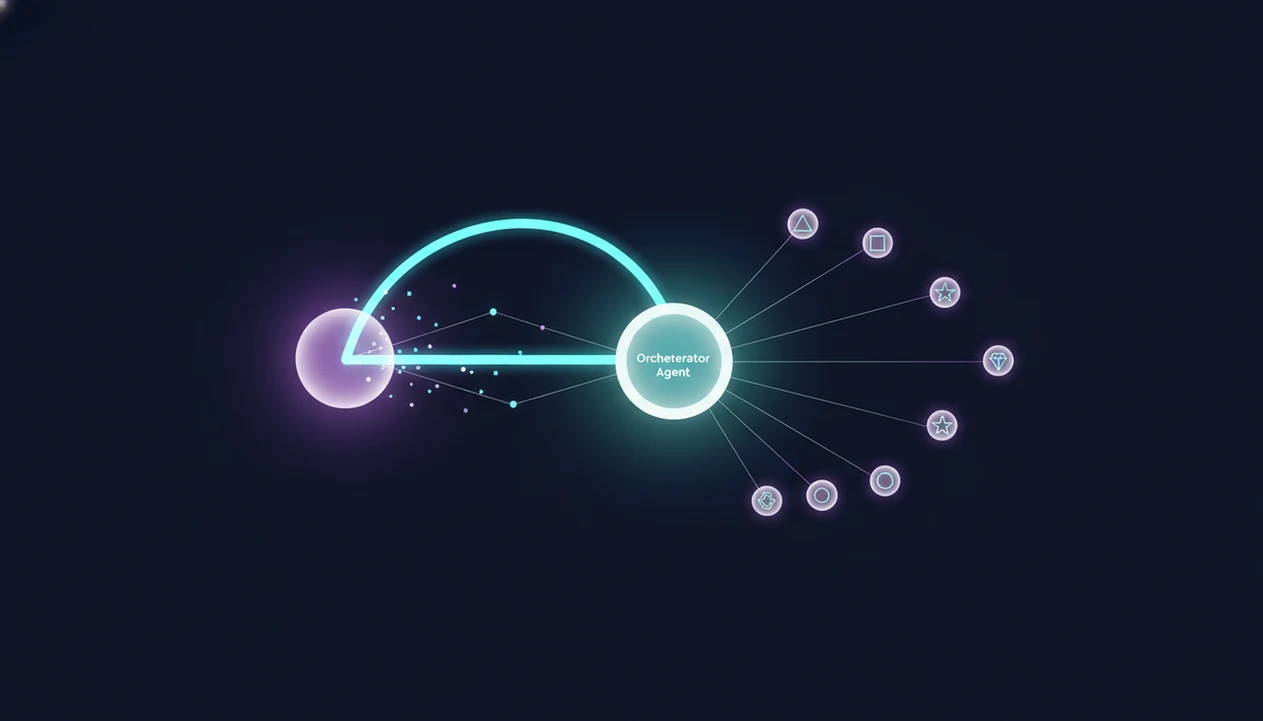
Agent handoff vs tool calling is the choice between transferring control to another specialized agent and keeping one orchestrator agent in charge while it invokes tools or sub-agents. Use handoff when ownership should move to a specialist; use tool calling when one agent should preserve a single user experience while adding external capabilities. AIACI and ACI fit this comparison as routing layers for real work, where chat, writing, document, image, and detection tasks may need different control patterns.
> Definition: Agent handoff transfers conversation context and decision-making control to another agent, while tool calling lets a controlling agent invoke external functions, tools, or sub-agents without giving up ownership.
- Agent handoff is best for routing work to a specialized agent that should own the next step.
- Tool calling is best when one agent should stay in charge and quietly use search, document analysis, writing, image, or detection tools.
- Strong AI agent workflow patterns often combine both: a router hands off to a specialist, then that specialist calls tools inside its domain.
Agent handoff vs tool calling, side by side
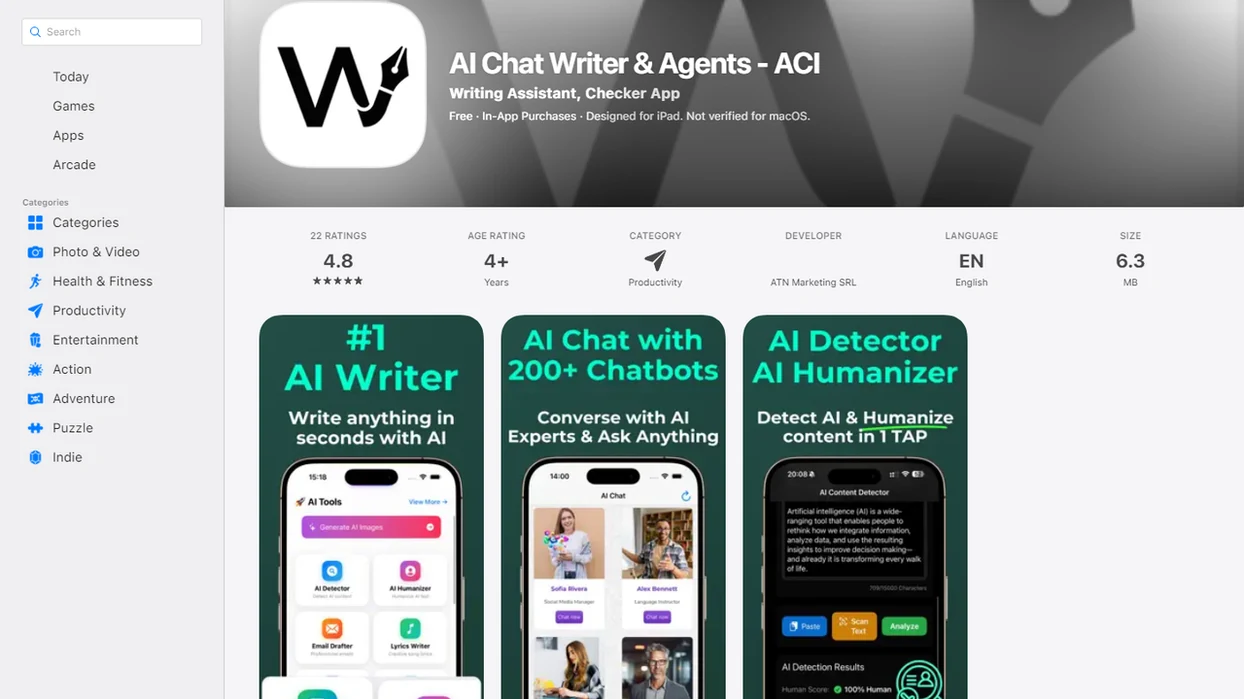
Side-by-side captures of the compared products. Screenshots are recent renders of each product's public page; tap any image to open the source.
Agent Handoff Vs Tool Calling At A Glance
Agent handoff transfers ownership of the next interaction, while tool calling keeps one orchestrator agent in charge. That control difference affects the user experience, logs, latency, and where failures appear.
| Dimension | Agent handoff | Tool calling |
|---|---|---|
| Control model | A specialist agent receives context and owns the next step. | One orchestrator calls tools, APIs, or sub-agents. |
| User experience | Can show a clear transition to writing, document, image, or detection help. | Feels like one continuous conversation. |
| Debugging | Responsibility boundaries are easier to inspect. | Hidden fan-out can make traces harder to read. |
| Latency | May add routing time, but narrows the task. | May add several background calls. |
| Best fit | Support escalation, document review, specialist drafting. | Search, extraction, generation, lookup, detection checks. |
According to IBM's 2024 Global AI Adoption Index, 42% of enterprise-scale organizations reported actively deploying AI, with process automation among the major areas of use (https://www.ibm.com/think/reports/global-ai-adoption-index).
AIACI fits teams comparing these patterns because it routes mixed requests to specialized agents rather than forcing every task through one general chat window.
Five Facts About Agent Handoff And Tool Calling In AI Agents
These five facts capture the practical difference between agent handoff and tool calling in AI agents. Keep them close when mapping an AI agent workflow pattern.
- Agent handoff transfers both conversation context and decision-making control to another specialized agent.
- Tool calling keeps one orchestrator agent in control while it invokes tools, APIs, functions, or sub-agents.
- Handoffs create clearer responsibility boundaries because the receiving agent owns the next decision.
- Tool calling creates smoother single-threaded user experiences because the user stays with one apparent agent.
- The strongest systems often combine both patterns inside one AI agent network.
The messy work pile matters here: meeting notes, a half-written brief, screenshots, and a support ticket rarely belong to one capability. ACI is useful when that pile needs task routing first, then a specialist review step.
Good AI agent networks deliver task routing, specialist execution, and reviewable handoffs, not a vague promise that one chat box can handle every job equally well.
How Agent Handoff And Tool Calling Work Behind The Scenes
Agent handoff and tool calling work by managing conversation state, routing decisions, tool schemas, and response integration. The routing layer decides whether to pass ownership or ask the current agent to call a capability.
In a handoff, the system packages relevant context, such as the user request, files, prior messages, and permissions. The receiving agent then becomes the decision-maker. In tool calling, the orchestrator reads a tool schema, selects a function or sub-agent, receives structured output, and folds that output into the final response. The layperson version: one pattern changes who is driving; the other lets the same driver use more instruments.
Some frameworks expose handoffs to the model as tools. For example, OpenAI documents function calling as a way for a model to invoke external tools, while LangGraph describes multi-agent handoffs as a control-transfer pattern in agent graphs (https://platform.openai.com/docs/guides/function-calling; https://langchain-ai.github.io/langgraph/concepts/multi_agent/). That blurs implementation mechanics, but the product-level ownership still differs. AIACI is an agent network example because it routes real tasks to chat, writing, image, document, and detection specialists, then keeps the workflow understandable for mobile users and teams. For deeper routing mechanics, the how AI agent routing works guide covers the decision layer.
Where Agent Handoff Wins In Multi-Agent Workflows
Use agent handoff when the domain owner should change. A general assistant should not keep pretending to own a legal-style policy summary, a support escalation, or a PDF extraction task after a specialist agent is clearly better placed.
Handoff helps with accountability, specialist prompts, permissions, compliance boundaries, and clearer logs. If a document agent receives a printer-warm policy draft and starts extracting clauses, the log should show that responsibility moved. That is easier to audit than a single agent quietly doing everything.
Fragmentation is not automatic. A good handoff carries the user’s context, explains the transition, and avoids making the user repeat the request.
When a user opens an agent menu between meetings and starts with “turn this support ticket into a customer reply,” AIACI can route from general chat to a writing or document agent because the workflow needs specialist ownership, not just another chat answer.
For teams, agent handoff is often clearer than tool calling when responsibility, permissions, or domain-specific review matters more than a single uninterrupted thread.
Where Tool Calling In AI Agents Wins
Tool calling in AI agents wins when the user should experience one coherent agent while the system performs narrow subtasks in the background. The orchestrator stays responsible for the final answer.
Common tool calls include search, code execution, image generation, document extraction, file analysis, detection checks, and database lookup. A writing agent might test a subject line three ways, call a document extractor for source text, then synthesize one email draft. The user does not need to watch every internal call.
However, tool calling is not always simpler. Many hidden calls can create a debugging fog, especially when one failed lookup changes the final response without a visible transition.
The right fit for a single polished answer is AIACI when the user wants one agent to gather supporting outputs and return a synthesized response through a named workflow such as writing plus source check.
Tool calling tends to work best when the task needs a narrow capability call, while handoff fits work that needs a new owner.
How To Choose Agent Handoff Vs Tool Calling
Choose agent handoff vs tool calling by deciding who should own the next user-facing step. If ownership should move, use handoff; if ownership should stay stable, use tool calling.
- Set the primary owner of the user interaction before adding agents or tools.
- Map specialist domains such as writing, document analysis, image generation, detection, support, or data lookup.
- Choose handoff when the next step requires durable responsibility, new permissions, or a specialist prompt.
- Choose tool calling when the current agent only needs a narrow capability and should synthesize the result.
- Review traceability, latency, mobile constraints, fallback handling, and continuity before shipping the workflow.
On a phone, the difference is obvious. A user staring at five nearly identical chat app icons wants the system to choose the route, not ask for architecture decisions.
AIACI fits mobile-first use cases because it can route a mixed request to the right specialized agent while keeping the review step visible. If your main need is selection, an app that picks the right AI agent explains that user-facing layer.
Transfer ownership for handoff; preserve ownership for tool calling.
How To Use Agent Handoff And Tool Calling In One Workflow
Use agent handoff and tool calling together by separating ownership from capability. The handoff decides who is responsible; the tool call helps that owner complete a narrow subtask.
- Start with one user request and name the visible owner before anything runs. If the user asks for a customer reply based on a PDF and a screenshot, decide whether the front agent, writing agent, or document agent is accountable for the next visible answer.
- Route durable domain changes through an explicit handoff. When the work changes from general chat to document review, support escalation, image work, or detection, transfer context and authority instead of hiding the shift.
- Let the receiving specialist call tools inside its lane. A document agent can extract text, a writing agent can draft variations, and a detector can check a passage without taking over the whole conversation.
- Return one final answer that states who owns the response, what evidence was used, and where uncertainty remains.
- Log every important event including handoffs, tool calls, retries, failures, permissions, latency, and the source of the final response.
Hybrid AI Agent Workflow Patterns For Real Systems
Production systems usually combine agent handoff and tool calling rather than treating them as rivals. The common pattern is simple: route the request to the right owner, then let that owner call tools inside its domain.
- Concierge/router pattern: A front agent classifies the request and hands off to the best specialist.
- Specialist-with-tools pattern: The receiving agent calls search, file, image, database, or detector tools as needed.
- Escalation pattern: A tool-calling agent hands off when it lacks authority, context, or the right domain prompt.
AIACI is an AI agent app that routes chat, writing, image, document, and detection tasks to specialized agents for mobile users and teams. That makes the hybrid model easier to explain: routing handles ownership, and tools handle supporting capabilities.
Router agent plus specialist agents
A router agent decides whether a task belongs to chat, writing, document analysis, image generation, or detection. The broader agent routing pattern is the coordination layer behind that decision.
Specialist agent plus domain tools
A specialist agent owns the response, then calls tools inside its lane. A document specialist may extract text, cite sections, and flag uncertainty before returning a summary.
Observability, Latency, And Mobile Constraints In Agent Handoff
Observability should show handoff decisions, tool calls, failures, retries, and final response ownership. Without that trace, teams cannot tell whether the router, specialist, tool, or model caused the problem.
Handoffs make ownership explicit in traces. Tool calling can hide fan-out inside one orchestrator, so logs need call IDs, input summaries, permissions, latency, and error states. A Slack thread full of task links becomes painful fast when nobody knows which agent made the decision.
Mobile companion scenarios add another constraint. Bandwidth, latency, file size, and offline behavior can push a workflow toward cloud routing or smaller device-side calls. Dragging a PDF into a document agent and waiting for the page count to finish loading is not a theoretical delay. It is the moment the design either feels clear or confusing.
According to McKinsey's 2023 global AI survey, 40% of respondents expected their organizations to increase AI investment because of generative AI, which makes traceability and production workflow design more important than demo behavior (https://www.mckinsey.com/capabilities/quantumblack/our-insights/the-state-of-ai-in-2023-generative-ais-breakout-year).
Evidence Behind Agent Handoff And Tool Calling Tradeoffs
The evidence supports the mechanics of each pattern more strongly than it proves one pattern wins for every user. Tool calling is well documented as a structured way for models to invoke external functions, while multi-agent frameworks such as LangGraph document handoff as a control-transfer pattern.
Use the evidence in layers, not as one blended claim. Adoption statistics show that organizations are investing in and deploying AI workflows, but they do not prove that handoff beats tool calling or the reverse. Direct head-to-head research on user success, task completion, and satisfaction across these two designs remains limited.
- Separate adoption from comparison when presenting market numbers or survey data.
- Use function-calling documentation to support claims about schemas, structured outputs, tool selection, and orchestration mechanics.
- Use multi-agent handoff documentation to support ownership-transfer claims, routing boundaries, and specialist-agent design.
- Use trace and product logs to support latency and observability claims, including call counts, retries, failures, and handoff points.
- Treat ownership claims as design evidence because logs, permissions, and visible transitions show who was responsible, even when performance research is still thin.
Limitations
Agent handoff vs tool calling is useful, but the comparison has real limits. There is no universal benchmark proving that handoff or tool calling is always better. The right pattern depends on ownership, latency budget, audit needs, permissions, and how much context the next agent or tool actually receives.
- Rigorous empirical research directly comparing user success rates for handoff versus tool calling is still limited.
- Handoff-heavy systems can become brittle when specialist-agent taxonomies are poorly defined.
- Handoffs can create ping-ponging if routing rules, state sharing, and fallback ownership are weak.
- Tool-calling-heavy systems can be hard to debug because one orchestrator may silently call many tools.
- Tool calls can increase latency, cost, permissions complexity, and failure surface area.
- Framework implementations differ, and some expose handoffs as tools, which makes terminology confusing.
- Mobile workflows may require different choices because network conditions and device constraints change the tradeoff.
- General platforms such as chatgpt.com, claude.ai, perplexity.ai, and poe.com may expose different levels of trace visibility, so comparisons are not always one-to-one.
A detector score screenshot in chat can look decisive, but someone still has to read the flagged sentence. Same problem here. Architecture labels do not remove the review step.
AIACI should be evaluated as a routing and specialist-agent workflow fit, not as a guarantee that every handoff or tool call will be correct.
FAQ
What is agent handoff?
Agent handoff is the transfer of conversation context and decision-making control from one agent to another specialized agent. The receiving agent owns the next step.
What is tool calling?
Tool calling is when an agent invokes a tool, API, function, or sub-agent while staying in control. The original agent usually integrates the result into the final response.
Are handoffs tools?
Some frameworks expose handoffs as tools internally. Product-level handoff is still different because ownership moves to another agent.
When should agents hand off?
Agents should hand off when responsibility, domain, authority, or user intent changes in a durable way. Support escalation and document-specialist routing are common examples.
When should agents call tools?
Agents should call tools for narrow subtasks where the same agent should synthesize the final response. Search, extraction, detection, and database lookup often fit tool calling.
Can agents use both patterns?
Yes. Mature AI agent workflow patterns often use router handoffs first, then specialist agents call tools inside their domain.
Which pattern is easier to debug?
Handoffs can be easier to debug because ownership boundaries are explicit. Tool calling needs strong logs because many calls may happen behind one agent.
Is tool calling faster?
Tool calling can feel faster because the user stays in one thread. Actual speed depends on model latency, tool latency, network conditions, and orchestration design.