

What a Single-Pass Text Agent Does
The AIACI text generation agent takes one instruction and produces complete output in a single execution cycle. There is no planning phase, no structural deliberation, and no multi-step refinement. You define the task-format, topic, audience-and the agent generates the finished text immediately. This makes it suited for tasks where the output specification is clear and the content does not require iterative development. The agent does not verify facts, access real-time data, or check output against external sources. Review all generated content before use.
The single-pass model works because many writing tasks have well-defined parameters. A product description needs a specific length, tone, and set of features to highlight. An email follow-up needs a clear purpose and appropriate formality. A social media caption needs to fit platform constraints. When the requirements are concrete, a single execution cycle produces usable output without the overhead of conversational refinement.

Single-Pass Execution vs Iterative Drafting
The text generation agent and the AI Writer serve different operational models. The writer agent follows a goal-plan-draft-deliver workflow suited for longer, structured content. The text generator skips the planning overhead and produces output directly from instructions. Choose the writer for content that needs sections, arguments, and organizational logic. Choose the text generator for content that needs speed and a clear specification.
Conversational tools like AI Chat work through dialogue-send a message, receive a response, adjust, resend. That model suits exploration and tasks where the requirements emerge through discussion. The text generation agent suits tasks where requirements are known in advance and execution speed matters more than discovery.
Effective Instructions for Direct Execution
The agent performs one action based on your instruction. Ambiguity in the instruction becomes ambiguity in the output. Specify: content type (email, description, summary, list), word count or range, tone (technical, conversational, formal), target audience, and any specific points to include or exclude. Each constraint reduces the agent's guessing and moves output closer to your intent.
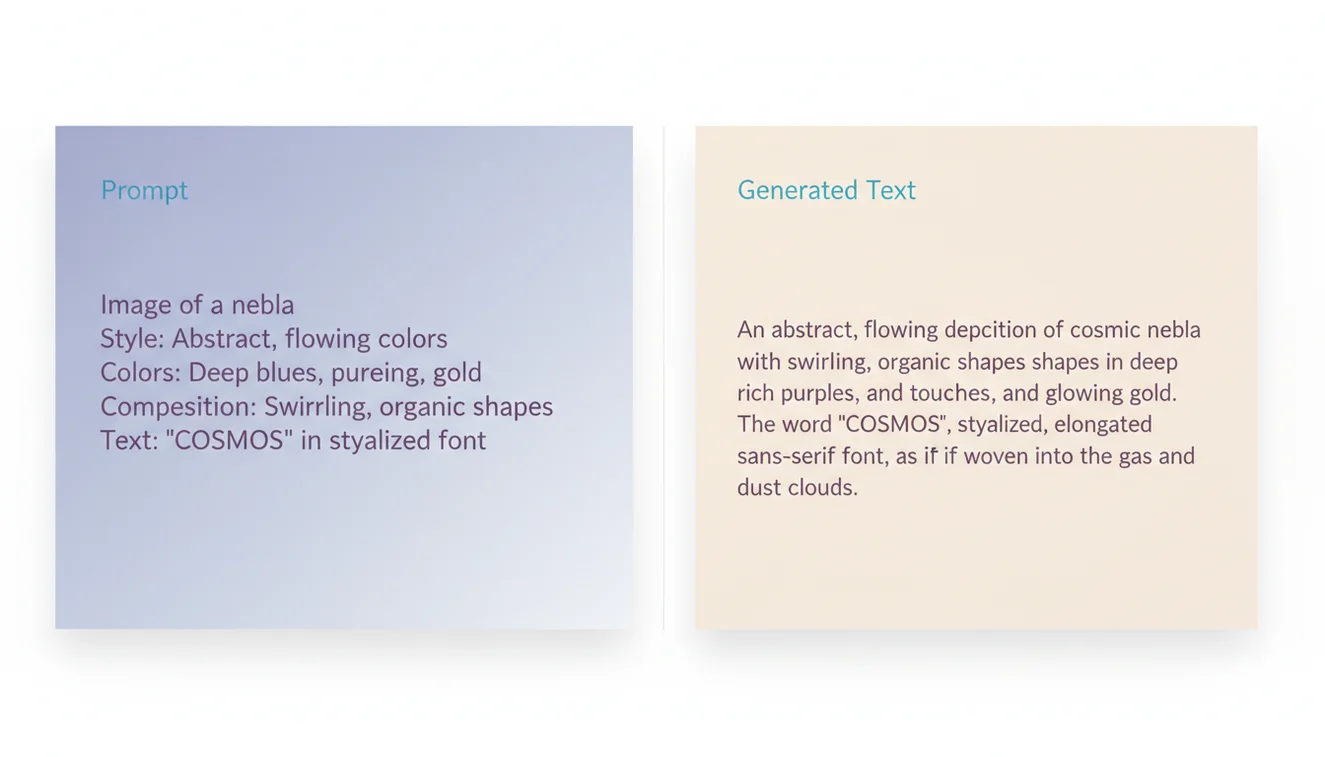
Instructions that include context produce better results than instructions that rely on implication. "Write a return policy" produces generic output. "Write a 300-word return policy for an online clothing store, 30-day window, free returns on unworn items, restocking fee on worn items" produces specific, usable content. The agent generates from what you state, not from what you assume it knows.
Operational Use Cases
Product descriptions for e-commerce catalogs at scale. Job posting descriptions standardized across departments. Internal knowledge base articles from subject matter expert notes. Customer support response templates. Meeting summary drafts from agenda bullet points. Newsletter section copy. Ad variations for testing. Each of these tasks has defined parameters that map well to single-pass execution.
Content operations teams use the agent to produce volume without proportional time investment. A batch of twenty product descriptions that would take a writer four hours takes twenty minutes of instruction writing and generation. The output requires editing-the agent is a production tool, not a publishing tool-but the time savings compound across repeated tasks.
Output Quality and Its Boundaries
Single-pass output is grammatically clean and structurally coherent. It defaults to a neutral, competent tone. It does not contain original research, first-hand experience, or verified data. The agent generates plausible text, which is not the same as accurate text. Statistics, dates, names, and specific claims in the output may be incorrect. Always verify factual content independently.
Output quality correlates directly with instruction quality. Well-specified instructions produce output that needs minor editing. Vague instructions produce output that needs substantial rewriting. The agent does not compensate for missing requirements-it fills gaps with generic defaults. Treat the instruction as a specification document: the more complete the spec, the closer the deliverable matches expectations.

Limitations of Single-Pass Generation
The agent lacks context between requests. It does not remember previous outputs or build on prior instructions. Each execution is independent. Long-form content that requires consistency across sections-a whitepaper, a multi-chapter guide-benefits from the iterative approach of the writer agent rather than disconnected single-pass requests.
The agent may produce content that triggers AI detection tools. Generated text has statistical properties-uniform sentence length, predictable vocabulary-that detectors identify. For content published under a human byline or subject to AI screening, run output through the AI Humanizer and verify with the AI Detector before publication. Do not submit AI-generated content as original human work in academic or contractual contexts that prohibit it.
AIACI Text Generation App
The text generation agent is available free on the web and through AIACI on the web. Open AI Chat for unrestricted access to the text generation agent and all platform tools.