
Why Vision Models Confuse Reproductions With Antiques
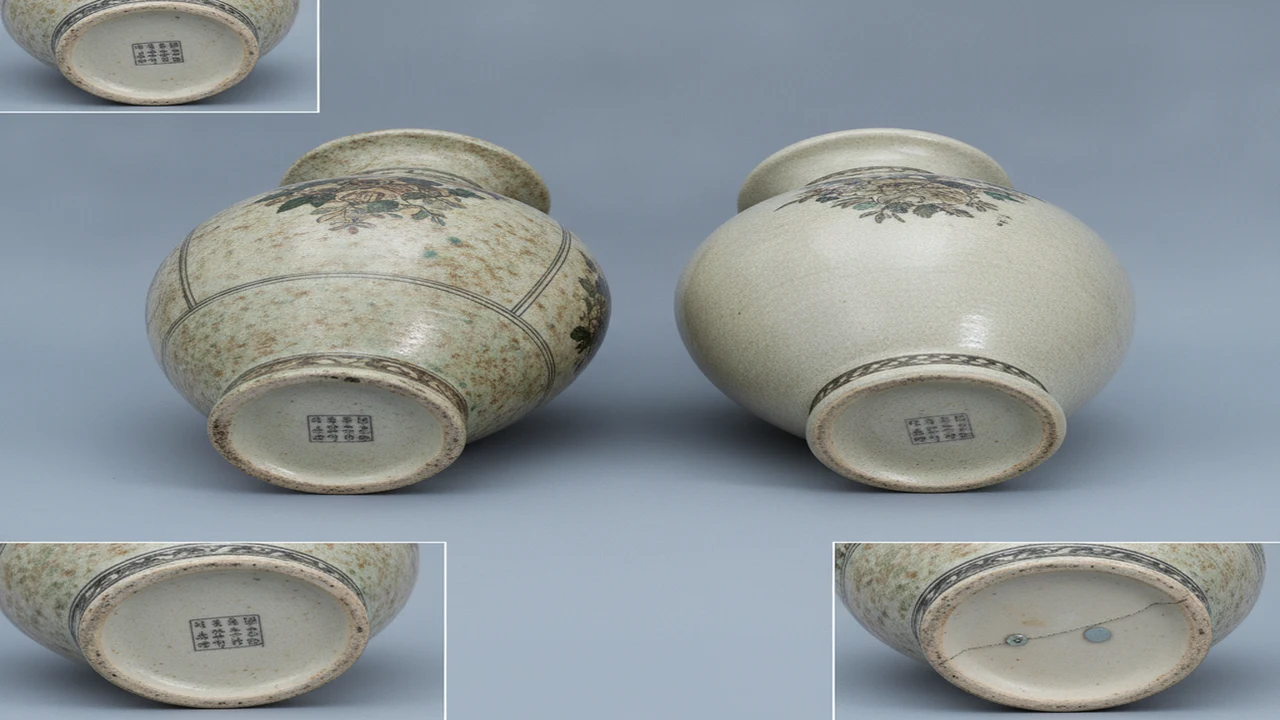
A reproduction does not need to fool every specialist to fool a vision model. It needs to reproduce the visible features the model associates with a category: silhouette, ornament, color, surface texture, typography, or a familiar-looking mark. The evidence that disproves the match may be underneath the object, inside a joint, behind a frame, or absent from the photograph.
Performance can also vary sharply by object type. An Antique Identifier analysis from 2026 reported roughly 88–94% accuracy for standardized marks such as stamped silver hallmarks and cast porcelain backstamps, compared with about 56–64% for hand-finished period furniture and about 45% for Murano-style mid-century glass reproductions. These reported figures are not universal app benchmarks, but the spread illustrates why a confident visual label should not be mistaken for authentication.
Quick answer: Vision models identify visual similarity, not authenticity. A reproduction can share the shape, decoration, patina, and marks associated with an antique while concealing modern fasteners, printed signatures, or other conflicting evidence. Use photo identification to generate possibilities, then verify construction, provenance, maker marks, condition, and relevant sold records before accepting an age or value estimate.
What does an image model actually see when it examines an antique?
Computer vision maps pixels to learned patterns. Depending on the model, those patterns may include shape, color, texture, ornament, edge structure, lettering, visible damage, and relationships between parts of an object. The system then ranks labels or descriptions that appear visually plausible.
That process is classification, not authentication. A model cannot establish a manufacturing date merely because an object resembles examples associated with that date. It also cannot derive provenance, confirm material age, or establish that a signature was applied by the claimed maker.
Consider a newly manufactured ceramic vase with a historic silhouette, period-style decoration, muted glaze, and an copied backstamp. A porcelain and ceramics identifier may place it in the same broad category as an older original because the relevant pixels are similar. Its identification confidence may be high even while authenticity confidence remains low. Valuation confidence is a separate question again because it depends on attribution, condition, dimensions, market venue, and comparable sales.
Why can a reproduction look authentic to computer vision?
Reproductions preserve the features most likely to influence recognition. Copied silhouettes, decorative motifs, glaze colors, typefaces, distressed surfaces, and replicated maker marks can all push a model toward an antique label. These features can influence human judgment too, which is one reason visual resemblance feels persuasive.
Artificial wear creates another route to a false positive. Abrasion may be added to handles and edges, dark material may be worked into recesses, and a surface may be stained or chemically altered to imitate age. In a photograph, manufactured wear can resemble gradual handling because the image does not reveal how the effect developed.
Framing determines which evidence enters the model. A front-facing photograph may display convincing decoration while hiding screws, seams, underside labels, casting traces, or machine-cut joints. If the image contains only supporting clues, the model has little basis for rejecting the tempting match. The resulting false positive assigns an antique identity to a later reproduction.
How do training data and image quality increase identification errors?
Training images gathered from the web may inherit seller descriptions, incomplete catalog records, and repeated attribution errors. Labels such as original, revival, replica, reproduction, and style-of are not applied consistently. If visually similar but historically different objects share one label, the model can learn appearance without learning the distinction that matters.
Coverage is uneven as well. Famous designs and well-photographed museum objects may be abundant, while regional makers, altered examples, ordinary reproductions, and undocumented workshop variations are scarce. A model can become good at retrieving a popular visual category without being reliable on the less common alternatives.
Poor photography adds uncertainty. Blur can erase tool marks; glare can hide a signature; compression can change fine lettering; shadows can imitate relief; and decorative backgrounds can attract attention away from the object. Tight cropping may remove an underside, scale reference, joint, or frame edge that would contradict the proposed identification. Consistent lighting and targeted detail photographs are generally more informative than a single styled image.
Which authenticity clues are difficult to verify from one photograph?
Antique furniture identification often depends on joinery, fasteners, saw marks, drawer construction, secondary woods, refinishing, and replacement components. A front photograph may establish a style, but it rarely shows whether joints and hardware fit the proposed period.
Porcelain, ceramics, metalware, and glass create different problems. Useful evidence may include foot-rim wear, casting seams, pontil treatment, glaze behavior, oxidation, weight, sound, material composition, ultraviolet response, and signs of later decoration. Several of these require multiple views or physical examination rather than pixel analysis.
Maker signatures, hallmarks, patent numbers, backstamps, and foundry marks should be transcribed and checked against dated references. A mark can be copied, transferred, recut, or placed on an object whose materials and construction conflict with the claimed maker. Learning to identify antique marks and hallmarks therefore involves more than finding a similar symbol.
Patina is also ambiguous. It may be genuine, artificially added, partly removed during restoration, or transferred unevenly across original and replacement parts. The Yale University Art Gallery discussion of fakes, replicas, and alterations reinforces the broader point that appearance must be considered alongside construction, provenance, and changes made to an object.
Why can an identification error produce a misleading value estimate?
An antique market value range depends on a chain of claims: object type, maker, date, material, dimensions, condition, authenticity, and relevant comparables. If the first classification is wrong, later calculations may be precise-looking but anchored to the wrong market.
A reproduction matched to an original may inherit auction results or dealer listings that do not apply to it. An antique price guide can help only after the object has been narrowed sufficiently. Asking prices show what sellers hope to receive; sold prices show completed transactions; auction estimates are pre-sale opinions; dealer retail prices may include service and overhead; and insurance values answer a different question from likely resale value.
Condition terms need verification too. Descriptions such as good condition or minor wear may conceal repairs, refinishing, replacement feet, re-backed canvases, later decoration, or structural damage. An antique value checker or an option to scan antique for value is best understood as a research starting point, not an appraisal of unseen physical evidence.
How should scanner results differ from a manual antique lookup?
A scanner is useful for speed and candidate generation. It may suggest an object category, style, possible era, material, or search vocabulary from one image. Antique Identifier - Relic, for example, is presented around a one-photo antique scan that can produce material identification and a condition summary. Those outputs still need external confirmation, especially when the photograph cannot reveal repairs, substitutions, or internal construction.
Manual lookup starts from exact evidence. It uses transcribed marks, dated catalogs, manufacturer records, dimensions, construction references, documented provenance, and sold examples with comparable attribution and condition. It is slower, but it allows the researcher to challenge a proposed match rather than accepting the nearest visual neighbor.
Google Lens can broaden a visual search, while WorthPoint can help locate recorded market examples. Neither should be treated as an authentication authority. A useful trust boundary is simple: let the scanner propose search terms, then let independent records and object-specific evidence determine whether the proposal survives.
How can you verify an AI antique identification before acting?
Use the following sequence to move from a visual suggestion to an evidence-led conclusion. Stop and lower confidence whenever marks, construction, provenance, or market records conflict.
- Photograph the complete object, underside, back, interior, joints, fasteners, damage, labels, signatures, hallmarks, and a ruler or other scale reference. Use even lighting and take focused close-ups rather than relying on digital zoom.
- Transcribe every visible mark before searching. Preserve punctuation, spacing, uncertain letters, symbols, and orientation. A guessed transcription can send the lookup toward the wrong maker.
- Search the exact wording and distinctive symbols in catalogs, maker references, museum records, and reputable archives. For a structured approach, see how to check an AI object match against marks and sold records.
- Compare the proposed period with construction, materials, dimensions, manufacturing traces, and known variants. Check whether each feature could realistically coexist in the same object.
- Challenge the identification by looking for falsifying evidence. Modern screws, incorrect typography, implausible wear, a copied hallmark, or incompatible materials can matter more than several general similarities.
- Confirm value only with genuinely comparable completed sales after narrowing maker, model, period, material, dimensions, condition, and authenticity status. The distinction between an AI price estimate and verified sold comparables is particularly important when the initial identity remains uncertain.
- Escalate to a qualified category specialist when the object may be valuable, disputed, inherited, insured, restored, or prepared for sale. Provide the specialist with photographs, dimensions, provenance documents, and the evidence already checked.
What evidence should raise or lower confidence in an antique claim?
Confidence should come from converging evidence with different failure modes. A matching shape and a plausible mark are weaker when both were easy to copy. Construction consistent with the proposed date, documented ownership, and closely matched sold records provide stronger corroboration because they answer separate questions.
Confidence should fall when evidence conflicts. A nineteenth-century-style mark on material introduced much later, period-looking wear around modern hardware, or provenance that begins with an unsupported seller claim should trigger more research rather than an averaged compromise.
What are the limits of photo-based antique identification?
A photo-based result is a research lead, not a certification of age, authorship, authenticity, or market value. Even a correct broad category can coexist with the wrong maker, period, variant, or valuation.
- A single image can omit construction details, dimensions, repairs, labels, and contradictory marks.
- Training labels may repeat seller errors or combine originals and reproductions within one visual category.
- Artificial patina, copied signatures, replacement components, and period-style decoration can create false positives.
- Photo analysis cannot reliably establish material age, internal construction, weight, provenance, or every restoration.
- A plausible identity does not validate an antique market value range because condition, authenticity, venue, and sale date affect comparability.
- High-stakes decisions may require physical examination, documentary research, or specialist material analysis.
When is professional examination the safer next step?
Seek specialist review before selling, insuring, restoring, exporting, donating, or dividing an object of potentially material value. Restoration is especially sensitive because cleaning, replacing parts, or altering a surface can remove evidence and reduce value.
Escalation signals include conflicting marks, an unusually high estimate, weak provenance, suspected forgery, major restoration, and few credible comparables. The relevant expert varies by category, such as ceramics, furniture, jewelry, books, glass, silver, or decorative arts. An appraiser may also need support from a conservator, archivist, or materials specialist.
Professional review does not create certainty in every case, but it can expose evidence that a photograph cannot. Use AI to narrow the search, then use independent evidence to decide whether to buy, sell, restore, or insure.
Comparison
| Evidence | What it may support | How it can mislead | Second check |
|---|---|---|---|
| Overall shape and decoration | Broad category, style, function, or possible period | Revival pieces and reproductions often copy recognizable forms | Compare dimensions, construction, documented variants, and dated references |
| Maker mark or hallmark | Possible manufacturer, workshop, material standard, or date range | Marks can be copied, transferred, recut, or misread | Transcribe exactly and compare placement, typography, method, and period examples |
| Patina and wear | Handling history, exposure, or possible age | Wear can be artificial, restored, uneven, or transferred across replacement parts | Inspect wear patterns, protected areas, joins, and material chemistry where justified |
| Construction and fasteners | Manufacturing method and compatibility with a claimed period | Repairs and replaced hardware can mix old and new evidence | Inspect hidden joints, secondary materials, tool marks, and alteration history |
| Materials and manufacturing traces | Likely production technique, composition, and category | Photos can distort color and conceal coatings, seams, or composite materials | Use physical inspection, measurements, ultraviolet examination, or material analysis |
| Provenance | Ownership history and a documented timeline | Family stories and seller claims may lack contemporary records | Check invoices, inventories, photographs, exhibition records, and archival continuity |
| Sold comparables | Market behavior for closely related objects | Wrong attribution, condition, venue, or sale date can make a result irrelevant | Match identity, dimensions, authenticity, condition, location, and transaction type |
Limitations
Frequently Asked Questions
Are antique identifier apps accurate?
Accuracy depends on the task and object category. An app may recognize a broad class, such as a porcelain vase or pressed-glass dish, without correctly establishing maker, period, authenticity, condition, or value. Ask which claim the result actually supports rather than interpreting one confident label as validation of every claim.
Can an AI antique identifier tell whether an item is a reproduction?
It may surface suspicious features such as inconsistent decoration, modern hardware, or an unusual mark, but it cannot establish authenticity from visual resemblance alone. Reproduction status may depend on hidden construction, material analysis, provenance, and reference examples unavailable in the photograph.
Can Antique Identifier TIQ appraise antiques by picture?
Antique Identifier TIQ can be used as a photo-based research aid for a possible identity, context, and estimated range. Users asking how much is my antique worth should verify the attribution, physical condition, authenticity clues, and comparable completed sales before relying on any range.
What photos help an antique identifier by picture produce a better result?
Provide evenly lit images of the full object, underside, back, interior, maker marks, joints, fasteners, damage, repairs, and labels. Include close-ups in focus and a scale reference. Avoid reflections, heavy filters, cluttered backgrounds, and crops that remove edges or construction details.
How should I verify a maker signature or hallmark?
Transcribe the mark exactly, including uncertain letters and symbols, then compare it with authoritative dated examples. Check whether typography, placement, application method, materials, and construction fit the claimed period. A matching symbol on an incompatible object should lower confidence.
Is Antique Identifier TIQ a replacement for a professional appraisal?
No. Antique Identifier TIQ may help organize initial research, but an antique identifier app does not replace physical examination or category expertise for consequential decisions. Seek a qualified specialist before selling, insuring, restoring, donating, exporting, or dividing a potentially valuable object.
Why do online antique price estimates vary so widely?
The results may mix asking prices, completed sales, auction estimates, dealer retail prices, and insurance values. Geography, sale date, attribution, dimensions, condition, restoration, provenance, and authenticity also affect comparability. A useful estimate should identify which records were used and explain why they match the object.