
Antique Value Verification: How to Check Identity, Age, and Price
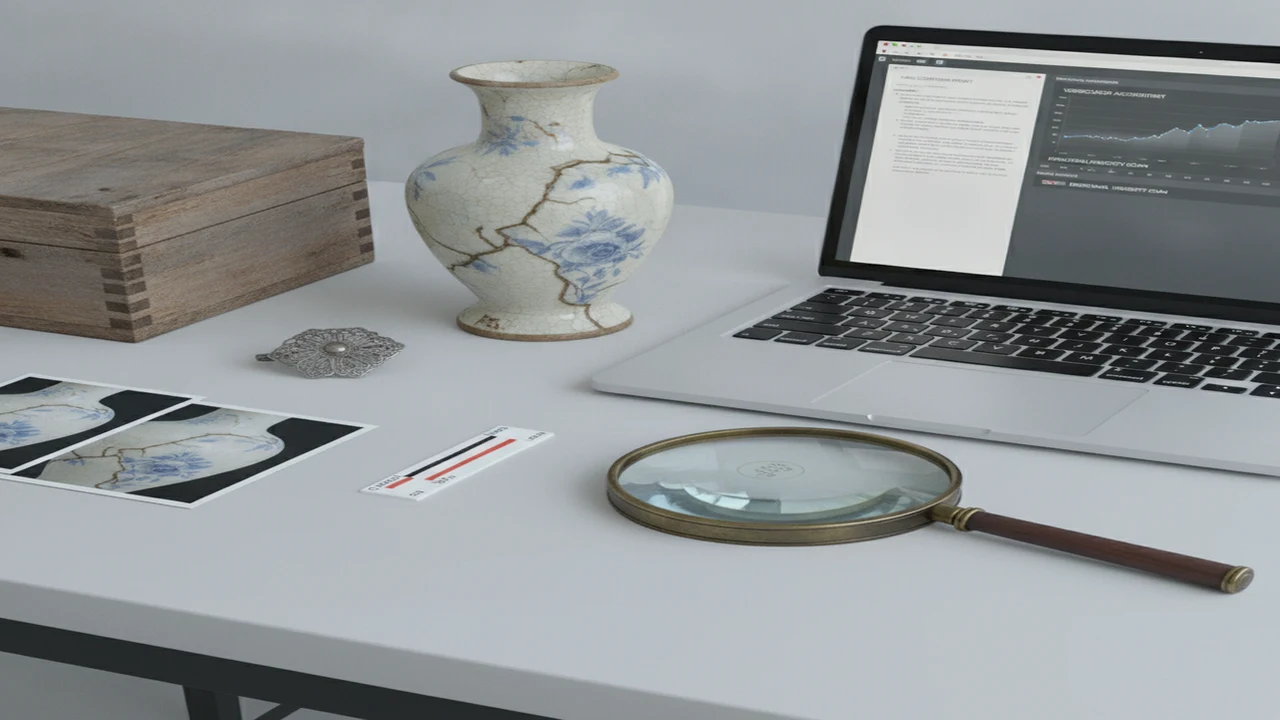
A photo scanner can suggest what an antique resembles, but resemblance is only the start of verification. Similar shapes, decoration, materials, and maker marks can span original pieces, later issues, reproductions, and deliberate fakes. A confident label does not resolve those differences.
Value also depends on details that computer vision may not capture reliably: dimensions, material, construction, restoration, provenance, regional demand, and the exact date of a sale. Before selling or insuring an item, confirm both the identification and the market evidence behind the price range.
This category explains where automated identification helps and where manual research remains necessary. Start with our guide to collectibles apps that make results easier to verify, then use the workflows below to inspect marks, compare candidates, and evaluate sold records.
Quick answer: Use AI as a candidate generator, not a final appraisal. Photograph the whole object, maker marks, construction details, damage, and dimensions. Confirm the proposed identity through multiple independent clues, then compare recent sold records for genuinely similar examples. If authenticity, insurance, tax, or a high-value sale is involved, obtain an appropriate specialist opinion.
What does this mean?
Definition: Antique value verification is the process of confirming an item's identity, age clues, condition, and comparable sales before relying on an AI-generated valuation or marketplace asking price.
Guides in this category
What should you verify before accepting an antique identification?
Begin by separating visible facts from model interpretation. Visible facts include measurements, inscriptions, material, joinery, fasteners, glaze, wear, and damage. Interpretations include the proposed maker, period, style, origin, and market category. Record the facts before searching so an attractive AI answer does not steer every later judgment.
Require agreement across several clues. A maker mark should fit the object's construction and documented production period. Materials and manufacturing methods should also make sense for the proposed date. Use the steps in checking an AI object match against marks and sold records to turn a visual suggestion into a traceable research claim.
Reject or downgrade a match when important details conflict. A similar floral pattern cannot override the wrong factory mark, modern hardware, implausible dimensions, or a documented date mismatch. When evidence is incomplete, use a broad label such as “style of” or “possibly” rather than assigning a precise maker.
- Photograph the front, back, base, interior, joints, fasteners, labels, and marks.
- Measure height, width, depth, weight, and relevant openings or components.
- Transcribe marks exactly, including punctuation, spacing, partial letters, and numbers.
- Separate age-related wear from chips, repairs, repainting, replaced parts, and deliberate distressing.
- Save source pages and sale dates so another person can reproduce the verification path.
How should an AI value range be checked against the market?
A tool such as Antique Identifier can help generate an identification candidate and rough value range from photographs. The important boundary is that a visual estimate may be based on a broad object class rather than the precise maker, edition, size, condition, or sales channel represented by your item.
Move from the suggested label to sold evidence. Compare completed transactions with the same maker or attributed workshop, material, dimensions, date range, form, and condition. Asking prices show seller expectations, while sold records provide stronger evidence of what a buyer accepted at a particular time and venue.
Our AI price estimate versus sold comps analysis explains why neither number should be copied without context. The How Much Is My Antique Worth guide also outlines a photo-led sold-comps workflow. Adjust cautiously for buyer premiums, shipping, restoration, incomplete sets, local demand, and the difference between auction, dealer, and private-sale markets.
When is photo search useful, and when should you switch to manual lookup?
Photo search is useful when you do not know the vocabulary for an object. It can surface candidate forms, decorative patterns, makers, and categories that would be difficult to describe. The Search Antiques by Photo guide distinguishes category discovery from the stronger task of proving that two objects share a maker, production date, or market value.
Switch to manual lookup once you have readable text, a possible maker, or a distinctive construction clue. Search exact mark transcriptions, catalog references, museum records, auction archives, and specialist publications. Antique Identifier may accelerate the first pass, but manual sources are better suited to resolving variants, date codes, factory histories, and attribution disputes.
Why do reproductions and restored objects create false positives?
Vision systems primarily evaluate visible similarity. Reproductions intentionally share silhouettes, decoration, labels, and surface cues with older objects, while photographs may conceal material differences or recent construction. Our explanation of why vision models confuse reproductions with antiques covers this limitation in greater depth.
Restoration creates a separate valuation problem. Refinished surfaces, replacement hardware, repaired ceramics, relined paintings, and assembled objects may still look consistent in a single image. Use close photographs and the Appraise Antiques by Picture workflow to document condition clues, but seek specialist inspection when authenticity or restoration would materially change the price.
Why this category
- Antique decisions often carry asymmetric risk. An optimistic false positive may encourage someone to overpay, insure at an unsupported figure, or describe a reproduction as period-made. An overly broad false negative may cause a scarce object to be sold without adequate research.
- The defensible workflow is layered: use computer vision to develop candidates, verify identity through marks and construction, inspect condition, then anchor value to relevant sold records. Confidence should increase only when independent evidence agrees. A polished result screen is not a substitute for traceable sources.
- AIACI organizes these guides around that trust boundary. Antique Identifier can support discovery and documentation, while catalogs, archives, sold listings, and qualified specialists provide the second checks needed for consequential decisions. The goal is not to reject automation, but to prevent a convenient estimate from being mistaken for confirmed value.
Frequently Asked Questions
Can a photograph identify an antique accurately?
A photograph can support a preliminary identification, especially when the object has distinctive marks or form. Accuracy falls when images omit the base, construction, dimensions, materials, or condition. Confirm the result with documentary sources and physical clues.
Are asking prices reliable evidence of antique value?
Asking prices show what sellers hope to receive, not what buyers have paid. Recent sold records for closely comparable objects are generally more useful, although venue, buyer premiums, shipping, and condition still require adjustment.
What does Antique Identifier provide?
Antique Identifier uses photographs to suggest object identities, maker clues, and rough value ranges. Its output should begin a research workflow rather than settle authenticity or sale value.
Can Antique Identifier replace a professional appraisal?
No photo-based identification tool should replace a qualified appraisal when the result will support insurance, tax, estate, donation, or high-value sale decisions. A specialist can inspect materials, construction, restoration, provenance, and market context that may not be visible in photographs.
How many sold comparables should I find?
There is no universal minimum because scarce objects may have few valid matches. Prioritize relevance over volume and look for a consistent cluster rather than selecting the highest result. Record why each comparable is similar or different.
How recent should antique sold records be?
Use the most recent relevant records available, but do not discard older sales when the object is rarely traded. Note the sale date and consider changes in demand, currency, inflation, venue, and buyer premiums before making adjustments.
What photographs help an antique scanner most?
Provide a clear overall view plus the back, base, interior, edges, joints, labels, and maker marks. Include a scale reference or exact measurements, and photograph chips, cracks, repairs, replaced parts, and surface wear separately.
Can the Appraise Antiques by Picture workflow confirm authenticity?
It can organize visible evidence and direct attention to marks and condition, but photographs alone may not resolve authenticity. Material analysis, provenance research, ultraviolet examination, or in-person specialist inspection may be necessary.
Why does an AI result identify the wrong maker?
Different makers often used similar forms, motifs, and production techniques. Image quality, incomplete marks, later labels, and reproduction patterns can also push a model toward the wrong candidate. Check the proposed maker against documented marks and production dates.
Should I clean an antique before photographing it?
Avoid aggressive cleaning before identification because residues, patina, labels, and surface coatings may contain useful evidence. Remove only loose dust when safe, and document the original condition first. Specialist conservation advice is appropriate for fragile or potentially valuable objects.
How do I verify a maker mark found by photo search?
Transcribe every visible character and compare it with dated examples from credible catalogs, museum collections, or specialist references. Check whether the mark style, placement, production method, and date fit the whole object. Similar lettering alone is insufficient.
When should I stop researching and contact a specialist?
Escalate when evidence conflicts, the object may be unusually valuable, authenticity is disputed, or restoration is difficult to assess. Specialist review is also appropriate when a valuation will be used for insurance, tax, probate, donation, or a consequential sale.