
Check an AI Object Match Against Marks and Sold Records
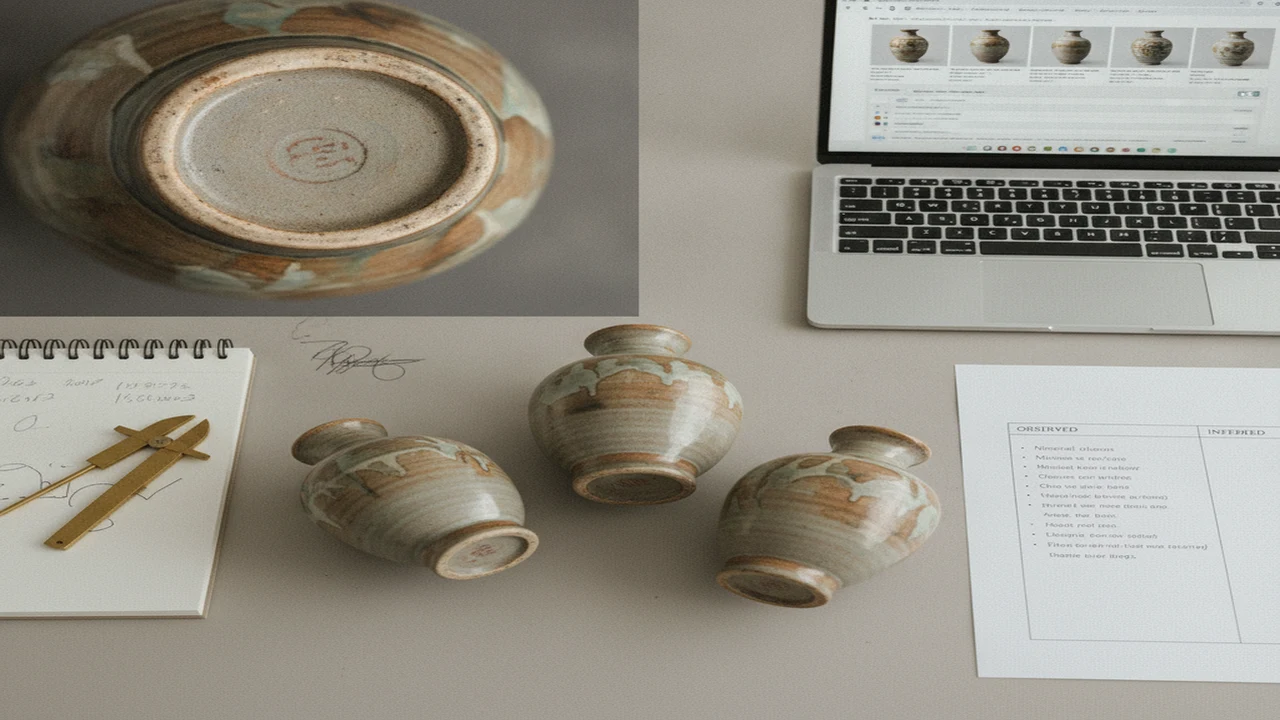
A convincing photograph match can still be wrong. Vision systems may emphasize a silhouette, decorative border, background, or logo while missing a factory stamp, replacement component, copied pattern, or material difference. The useful question is not whether the result looks similar, but whether independent evidence supports the proposed maker, period, construction, and value.
Independent validation is central to AI accuracy. A systematic review of AI system validation published in 2021 reported that more than 60% of evaluated studies used task-specific accuracy measures and separate ground-truth datasets. Image-matching evaluations by Li et al. (CVPR, 2015) and Maier et al. (CVPR Workshops, 2017) also found differences exceeding 20 percentage points between descriptor-matcher pipelines on the same dataset. The model and reference data can materially change the answer.
Quick answer: Use an AI match as a search lead, not a final identification or valuation. Photograph the object, marks, construction, wear, repairs, and measurements. Decode marks separately, then compare genuinely similar completed sales by material, size, age, condition, and attribution. If marks or construction conflict with the visual match, lower confidence and seek a relevant specialist.
What evidence should you collect before checking an AI match?
Build an evidence set before you search antiques by photo. Record dimensions, weight where it helps distinguish materials or models, the apparent material, any provenance claim, and where the object was found. Keep claimed history separate from facts visible on the object.
Use diffuse lighting, sharp focus, a neutral background, and several angles when you identify antiques by photo. These choices reduce visual ambiguity. They do not establish age or authenticity.
Separate possible age indicators from ordinary wear. Hand-cut joints, oxidation in protected areas, period fasteners, tool marks, and material shrinkage may be informative when considered together. Dirt, scratches, artificial distressing, replacement hardware, and recently applied patina require different explanations.
- Photograph the full object from the front, sides, and an elevated angle.
- Photograph the underside, back, interior, joints, fasteners, labels, signatures, hallmarks, damage, repairs, and unusual construction.
- Measure height, width, depth, diameter, and relevant component dimensions.
- Record weight when it could separate solid material from veneer, composite, hollow, or plated construction.
- Photograph every identifying surface before cleaning or disassembly.
- Measure the object using consistent units and include a scale reference in detail photographs.
How should you run and record the initial picture match?
Submit the clearest overview as an early hypothesis. A picture-appraisal workflow such as Antique Identifier can generate a candidate object type and useful vocabulary. If the workflow accepts another image, repeat the query with a mark or distinctive construction detail.
Save the proposed object type, maker, era, material, origin, value range, confidence wording, and suggested search terms. Preserve the exact output or a dated screenshot so later research does not quietly alter what the AI originally claimed.
Create two columns. In the first, list visible facts such as a six-character impressed mark, dovetailed drawer, blue underglaze decoration, or measured diameter. In the second, place inferred claims such as eighteenth century, French, hand-painted, or a named factory.
An AI antique identifier by photo, vintage item identifier, or tool used to appraise antiques by picture is most useful at this stage for forming searchable candidates. Do not merge those candidates into the observed-facts column.
- Scan the overview image and, where supported, a separate detail image.
- Record the complete output, date, images submitted, and terms suggested by the result.
How do you verify maker marks, signatures, and hallmarks?
Transcribe every visible character exactly, preserving punctuation, letter case, symbols, numbers, partial words, and orientation. Note whether a character is uncertain rather than silently completing it. Photograph the mark upright and in its original orientation.
Inspect impressed, painted, engraved, cast, printed, and handwritten marks under angled light. Do not polish, scrape, wet, or chemically clean a mark merely to improve recognition. Those actions can remove residue, surface layers, or tool evidence.
Search the transcription without the AI-proposed maker first. Then search it with the object type, material, and possible country. Repeat with uncertain letters replaced by alternatives. Antique Identifier TIQ or another antique identifier app may suggest vocabulary for efforts to identify antique marks and hallmarks or identify maker signatures, but the mark needs an independent reference.
Classify the evidence. Date codes can constrain production years; registry numbers can point to designs; assay marks concern metal origin and fineness; factory marks identify production organizations; retailer labels indicate sellers; model numbers identify variants; signatures require comparison with documented examples.
Check placement, production method, typeface, known date range, and consistency with construction. An apparently relevant name carries little weight if the typeface postdates the claimed era or the mark appears in a location the factory did not use. For related visual failure modes, read why vision systems confuse reproductions with antiques.
- Transcribe marks without correcting or expanding them.
- Cross-check each mark against references independent of the proposed image match.
How do you convert the proposed match into a precise manual search?
Build searches from observable attributes: object type, material, technique, shape, dimensions, mark text, pattern, construction, and a cautiously stated date range. Start broad, such as “porcelain covered jar blue mark,” then narrow to “porcelain covered jar 24 cm six-character blue underglaze mark.”
Add the proposed maker only after the evidence-led query produces plausible results. If adding an uncertain maker removes close alternatives, remove that claim and test spelling variants, initials, translated material terms, former company names, and plausible mark misreadings.
Google Lens can surface visual analogues, but open the underlying pages and inspect their source descriptions, dimensions, marks, and photographs. Repeated copies of one catalog image are not independent corroboration.
For an unmarked object, prioritize construction, materials, regional style, and dimensions. Antique furniture identification might turn on drawer joints, secondary wood, hardware, and tool marks. A porcelain and ceramics identifier search might instead emphasize body type, glaze, foot rim, firing marks, and decoration method.
- Search broad observable terms before adding disputed maker or period claims.
How do you compare an AI valuation with sold records?
A sold record documents a completed transaction. It is different from a current asking price, an auction estimate, an automated value, or an unsold listing. WorthPoint can be an optional research tool, but no database represents every private, dealer, marketplace, and auction transaction.
Gather several recent comparables when available. Record the sale date, venue, currency, dimensions, condition, attribution, accessories, and whether the figure is a hammer price or includes a buyer premium. For graded categories, distinguish certified objects from raw examples because their condition evidence and market treatment differ.
Require close agreement on maker, mark, material, size, model or pattern, age, condition, provenance, and authenticity status. Auction estimates describe expectations. Hammer prices exclude the buyer premium. Buyer-inclusive totals include disclosed premiums. Dealer prices and active marketplace listings remain asking prices.
To answer “how much is my antique worth,” produce a dated antique market value range rather than one precise figure. Explain which comparables set the lower and upper bounds, then adjust for documented condition or attribution differences. The guide to confirming an AI estimate with sold comparables covers this distinction in more depth.
- Compare completed transactions with the same variant and materially similar condition.
- Adjust the range only for differences you can describe and support.
When should you use a scanner instead of manual lookup?
Use a scanner to generate object categories, candidate eras, materials, descriptive terms, and possible makers. Switch to manual lookup for mark validation, exact model distinctions, reproduction research, provenance, and transaction-level comparison.
AntiqSnap: Antique Identifier uses snap antique identification to form an item record and offers total collection value tracking. Antique Identifier - Relic emphasizes antique era identification, a condition summary, a country of origin estimate, and a USD value estimate. Antique Identifier TIQ is another scanner-led starting point.
Those feature categories do not establish which service is the best app to identify antiques. No comparative test log or independent category-level accuracy data was supplied. A neutral shortlist should therefore focus on workflow fit and the evidence each result exposes for checking.
For a broader view of verification features, see collectibles apps that make results easier to verify.
Where should you set the trust boundaries for an AI match?
Escalate the object when expected value is high, marks conflict, forgery or restoration is suspected, material remains uncertain, ownership is disputed, or the result will support insurance, tax, restoration, or specialist-venue sale decisions.
Choose expertise by category. Options include a category-specific antique appraiser, auction specialist, conservator, gemologist, assay office, professional grading service, or relevant authentication service. Give the specialist the original photographs, measurements, mark transcription, provenance claims, and conflicting evidence.
How should you document the final identification and value range?
Create a portable record containing photographs, measurements, mark transcription, candidate identity, supporting references, conflicting evidence, sold comparables, condition adjustments, date checked, and confidence level. Save source titles, listing dates, sale dates, and screenshots where permitted.
Use “confirmed” only when independent evidence resolves the important attributes. Use “probable” when several sources agree but one material point remains unverified, “possible” for a plausible candidate with limited support, and “unresolved” when evidence conflicts or is too sparse. Add a short reason beside every label.
Record why each comparable was accepted or rejected, including exact attributes such as size, pattern, mark, restoration, attribution wording, and included accessories. Revise the range when stronger attribution, new condition findings, or newer sales become available.
Antique Identifier TIQ may help save an antique collection, but keep the photographs, transcripts, references, and comparable worksheet exportable outside any single app. The auditable sequence is scan, inspect, transcribe, search, compare, document, and escalate when unresolved uncertainty affects the decision.
- Document accepted facts, disputed claims, sources, and value adjustments.
- Escalate unresolved identity, authenticity, material, or value conflicts before acting.
Comparison
| Evidence checked | What must match | Common mismatch | Verification source | Weight in final conclusion |
|---|---|---|---|---|
| Maker mark or signature | Text, symbol, placement, method, typeface, and date range | Partial reading, copied mark, retailer mistaken for maker | Maker archive, mark reference, catalog, assay office | High when independently documented |
| Material and construction | Body material, finish, joints, fasteners, manufacturing technique | Veneer mistaken for solid wood or composite mistaken for stone | Physical inspection, conservator, technical reference | High |
| Dimensions and form | Overall size, proportions, component measurements, intended form | Miniature, later variant, or reproduction in another scale | Catalog dimensions and measured object | Medium to high |
| Pattern or model | Pattern details, model number, decoration method, documented variants | Copied motif or visually similar series | Factory catalog, museum record, specialist reference | High when variant-specific |
| Condition and restoration | Damage, repairs, replacements, refinishing, completeness | Restoration hidden by lighting or omitted from a listing | Condition report, detailed photographs, conservator | High for valuation |
| Provenance | Ownership sequence, dates, documents, and relationship to the object | Family story without records or documents tied to another item | Receipts, inventories, archives, prior catalogs | Variable, potentially high |
| Completed sale record | Same variant, material, size, attribution, condition, and sale terms | Asking price, unsold listing, different model, undisclosed premium | Auction result or marketplace completed-sale record | High for a dated value range |
| AI-proposed value range | Transparent basis, date, currency, and genuinely comparable objects | Mixed asking and sold prices or dissimilar examples | Underlying records checked manually | Low until independently supported |
Limitations
Computer vision can produce false positives when objects share silhouettes, decoration, color, or photographic composition. Poor lighting, missing scale, cropped or mirrored images, worn or partial marks, replacement components, and visually similar materials increase ambiguity. Finishes, veneers, composites, restoration, and artificial aging can also distort material and age suggestions.
A genuine-looking mark may have been copied, transferred, added later, or attached to a reproduction. Confidence wording from a model is not measured authenticity or valuation confidence unless the product documentation explains the calculation and its validation. Reports associated with AntiqSnap include incorrect wood or material suggestions and difficulty separating reproductions from genuine objects. Relic places core identification and collection functions behind a subscription.
Automated ranges may combine asking prices, completed sales, different currencies, dissimilar dimensions, uncertain attributions, and different fee conventions. Sold-record databases can omit private transactions, returns, negotiated amounts, premiums, shipping constraints, or corrected catalog descriptions. Condition, provenance, regional demand, and venue can move a realized price away from the estimate.
High-value, disputed, insured, restored, or authenticity-sensitive objects require appropriate human review. Do not sell, insure, restore, or pay substantial appraisal fees on the strength of a picture match when marks, material, attribution, ownership, or comparable-sales evidence remains unresolved.
Frequently Asked Questions
Can a photo confirm that an antique is authentic?
No. A photograph can reveal visual clues and support candidate research, but authenticity may depend on construction, material analysis, mark history, provenance, restoration evidence, and physical inspection.
Are sold listings more reliable than current asking prices?
Completed sales are generally more relevant, but only when identity, condition, dimensions, date, attribution, and transaction details are comparable. An unrelated sold object can be less useful than a well-documented reference.
What should I do when the maker mark conflicts with the AI match?
Lower the identification confidence and research the mark independently. Check its transcription, placement, production method, typeface, date range, and consistency with the object's construction before accepting either explanation.
Can Antique Identifier TIQ identify an object from a partial mark?
It may suggest candidate terms from the available image, but a partial mark can support several readings. Photograph it under angled light, preserve uncertain characters, and verify each candidate against documented mark examples.
How many sold records should I use for an antique value range?
Use multiple strong comparables when available, but do not impose a fixed minimum on rare categories. Disclose sparse evidence and widen or withhold the range when transactions are too dissimilar.
Why do two antique appraisal apps return different values?
They may interpret the photograph differently, search different data, select different comparables, assume different condition, or use different update dates. Inspect the records behind each range rather than averaging the outputs.
When should Antique Identifier TIQ be followed by a professional appraisal?
Seek a professional appraisal when value is potentially high, marks conflict, authenticity or restoration is uncertain, or the result will support insurance, tax, litigation, conservation, or a specialist sale.