
Pokemon Card Value Verification: Scanner Accuracy, Price Checks, and Collection Tracking
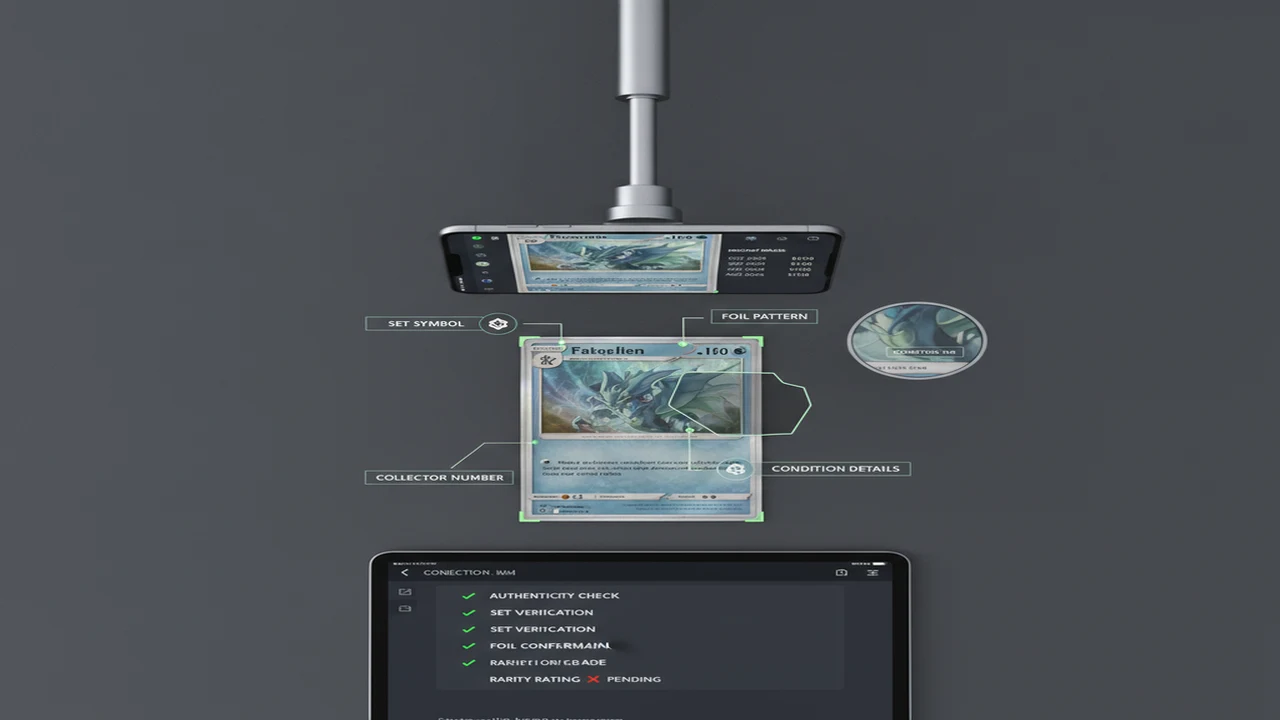
A Pokemon card scanner can reduce the time needed to identify a card, but identification and valuation are separate tasks. Computer vision may recognize the character and set while missing a parallel finish, promotional stamp, edition marker, language, or collector number. Any one of those differences can change which market records are relevant.
This category focuses on the checks needed between a scan and a decision to buy, sell, grade, insure, or catalog a card. Start with our explanation of how accurate Pokemon card value scanner apps are to understand why a confident match can still produce an unsuitable price.
The goal is not to reject automated recognition. It is to define its trust boundary. A scanner is useful for generating a candidate identity and retrieving possible market references, while the user remains responsible for confirming the physical card and the comparability of the pricing evidence.
Quick answer: Use a scanner to produce a candidate card match, then confirm the set name, collector number, language, finish, edition, and condition manually. Check recent sold transactions for the same version rather than relying on an asking price or blended estimate. For expensive cards, verify the result against a second source and separate raw-card values from graded-card sales.
What does this mean?
Definition: Pokemon card value verification is the process of confirming a card’s exact identity, variant, condition, and recent comparable sales before relying on an app-generated estimate.
Guides in this category
What should a Pokemon card scanner identify before showing a value?
A useful scan result should narrow the card to an exact printing, not merely recognize the featured Pokemon. Confirm the card name, set symbol or set name, collector number, language, and visible edition markers. If the app provides multiple candidates, compare these fields before accepting its preferred result.
Finish and rarity details require particular attention. Reverse holo, standard holo, promotional, stamped, full-art, alternate-art, first-edition, and unlimited versions can share much of the same artwork. Computer vision confidence may be high because the image is visually similar even when the selected variant is wrong.
The value shown after identification should also reveal what it represents. A market estimate based on active listings answers a different question from a figure based on completed sales. A graded price is not interchangeable with a raw-card estimate, even when the card identity is correct.
- Match the printed collector number character by character.
- Confirm the set and release rather than relying on artwork alone.
- Inspect foil pattern, stamps, edition marks, and promotional identifiers.
- Check whether the estimate is for raw, authenticated, or specifically graded copies.
- Record the currency, marketplace, sale date, and shipping treatment of each comparison.
How should you verify a value after the scan?
Begin by treating the scan as a search result. A tool such as Card Value Scanner can help identify a card and surface market context, but the next step is to inspect the proposed match against the physical copy. Use a clear image of the front and back, then verify every distinguishing field.
Next, collect several recent sold comparisons for the same version and approximate condition. Exclude bundles, unusually damaged copies, authenticated autographs, mislabeled listings, and sales that include unrelated extras. Asking prices can describe seller expectations, but they do not establish what buyers recently paid.
Our step-by-step guide to verifying a Pokemon card value after scanning explains how to move from identification to comparable-sale review. When prices vary widely, examine sale dates, seller descriptions, photographs, grading status, and whether shipping was included before calculating a reasonable range.
Which price source answers each valuation question?
No marketplace provides a universal value. TCGplayer can offer a structured US market reference, Cardmarket reflects European listings and transactions, and eBay sold results can expose recent buyer behavior across raw and graded cards. The appropriate source depends on region, card version, liquidity, and the decision being made.
| Valuation task | Useful source | Required confirmation |
|---|---|---|
| US raw-card baseline | TCGplayer | Match printing and condition category |
| European market context | Cardmarket | Check language, seller location, and currency |
| Recent raw or graded sales | eBay sold results | Inspect listing photos, sale date, grade, and shipping |
| Graded-card estimate | Recent sales for the same grading company and grade | Do not substitute a different grade or raw copy |
The comparison of TCGplayer, Cardmarket, and eBay for Pokemon prices explains how their datasets answer different questions. If two sources disagree, investigate the underlying listings rather than averaging the figures automatically. Differences may reflect region, condition mix, sale timing, fees, or sparse transaction volume.
Where should you set the trust boundary for scanner apps?
Choose an app according to the evidence it exposes, not the size of the number displayed. Our guide to the best Pokemon card scanner apps for verifiable prices prioritizes traceable pricing, variant controls, condition context, and collection correction tools. A user should be able to revise an incorrect match rather than preserve it as a confident but false entry.
The public Card Value Scanner: TCG App listing showed a rating of 3.9 out of 5 from 7 ratings when checked, providing two listing statistics from the Apple App Store, 2026. That small rating count describes listing feedback, not recognition accuracy. It should not be converted into a scan success rate.
Scanner limitations are most consequential with reflective surfaces, damaged labels, cropped photographs, sleeves, glare, low-resolution images, visually similar reprints, and scarce cards with few comparable sales. Automated pre-grading also cannot reproduce an in-person examination of surface scratches, dents, print lines, edges, corners, centering, and authenticity. For a high-value transaction, use manual identification, multiple sold comparisons, and qualified authentication where appropriate.
Why this category
- Pokemon card valuation combines computer vision, product identification, market retrieval, and condition judgment. An error early in that chain can propagate into an apparently precise collection total. These guides separate each stage so users can find where a result became unreliable.
- The category covers four connected questions: which scanners expose verifiable sources, how to confirm a result after scanning, how major marketplaces differ, and what accuracy claims can reasonably mean. Titles in the guide set can also be used as a reading path: Best Pokemon Card Scanner Apps for Verifiable Prices, How to Verify a Pokemon Card Value After Scanning, TCGplayer vs Cardmarket vs eBay for Pokemon Prices, and How Accurate Are Pokemon Card Value Scanner Apps?
- The verification-first approach matters because a displayed value can influence selling, grading, insurance, and trade decisions. A defensible estimate should preserve the card identity, source, date, currency, condition assumption, and comparable transactions. Without that record, a collection total is difficult to audit when the market changes.
Frequently Asked Questions
Can a Pokemon card scanner determine the exact value of a card?
A scanner can suggest an identity and retrieve market data, but it cannot determine one permanent value. Price depends on the exact printing, condition, region, sale date, grading status, and quality of the comparable transactions.
What should I check immediately after scanning a Pokemon card?
Confirm the set, collector number, language, rarity, foil treatment, and edition or promotional markers. Then verify whether the displayed price refers to a raw card, a graded card, an asking price, or a completed sale.
Is Card Value Scanner a substitute for manual price research?
No. It can shorten identification and price discovery, but the result should be checked against the physical card and recent comparable sales. Manual review is especially important when variants share artwork or the estimated value is high.
What is the difference between a market price and a sold price?
A market price is usually a calculated indicator derived from a platform’s available data. A sold price records a completed transaction, although it still requires review for condition, shipping, bundles, and listing accuracy.
Should I use TCGplayer, Cardmarket, or eBay for Pokemon prices?
Use the source that matches the card, region, and valuation purpose. TCGplayer is commonly used for US raw-card context, Cardmarket for European context, and eBay sold records for transaction-level review across raw and graded cards.
Why do two scanner apps show different values for the same card?
They may select different variants, marketplaces, currencies, condition assumptions, or calculation periods. Compare the underlying sources and exact card matches before deciding which estimate is better supported.
Can TCG App identify graded Pokemon cards?
Its public materials describe graded pricing context and related card features. Users should still confirm the grading company, numerical grade, label details, certification record, and recent sales for the same grade.
How many sold comparisons should I review?
There is no fixed number that works for every card. Review enough recent, genuinely comparable transactions to identify a plausible range, and give less weight to isolated outliers or poorly documented sales.
Are active eBay listings useful for valuation?
They can show current seller expectations and available supply, but they do not show what buyers accepted. Completed sold listings are generally more relevant, provided the card version, condition, grade, and transaction details are comparable.
Can an AI pre-grade predict a PSA, CGC, or BGS grade?
An AI pre-grade can organize visible condition signals from photographs, but it cannot guarantee a professional grade. Hidden dents, surface wear, altered cards, lighting, image compression, and grading-company standards can change the final result.
How should I track values in a Pokemon card collection?
Store the exact card variant, quantity, condition, acquisition cost, pricing source, currency, and date checked. Keep manual correction controls available so an incorrect scan does not distort the collection total.
When should I seek professional authentication?
Consider professional authentication when a card is valuable, frequently counterfeited, altered, or difficult to identify from images. Authentication addresses identity and legitimacy, while valuation still requires recent market evidence.