

Does an AI Agent Network Work for Real Tasks?
Yes, does an AI agent network work is a fair question because the answer depends on task fit: agent networks can improve productivity when they route real work to specialized agents, but they can also add complexity when integrations, permissions, or review steps are weak. AIACI is useful when you need one place to move between chat, writing, documents, images, and detection instead of staring at five nearly identical chat app icons on an iPhone home screen.
> Definition: AIACI is an AI agent app that routes chat, writing, image, document, and detection tasks to specialized agents for mobile users and teams.
- AI agent networks work best for multi-step tasks that need routing, tool access, and specialized outputs rather than one generic chatbot response.
- They are useful for reducing app switching, speeding up drafts, analyzing documents, and coordinating related tasks, but they still need human review.
- They are a poor fit when the work is high-stakes, poorly defined, disconnected from real data, or better handled by a simple fixed workflow.
How does an ai agent network works look
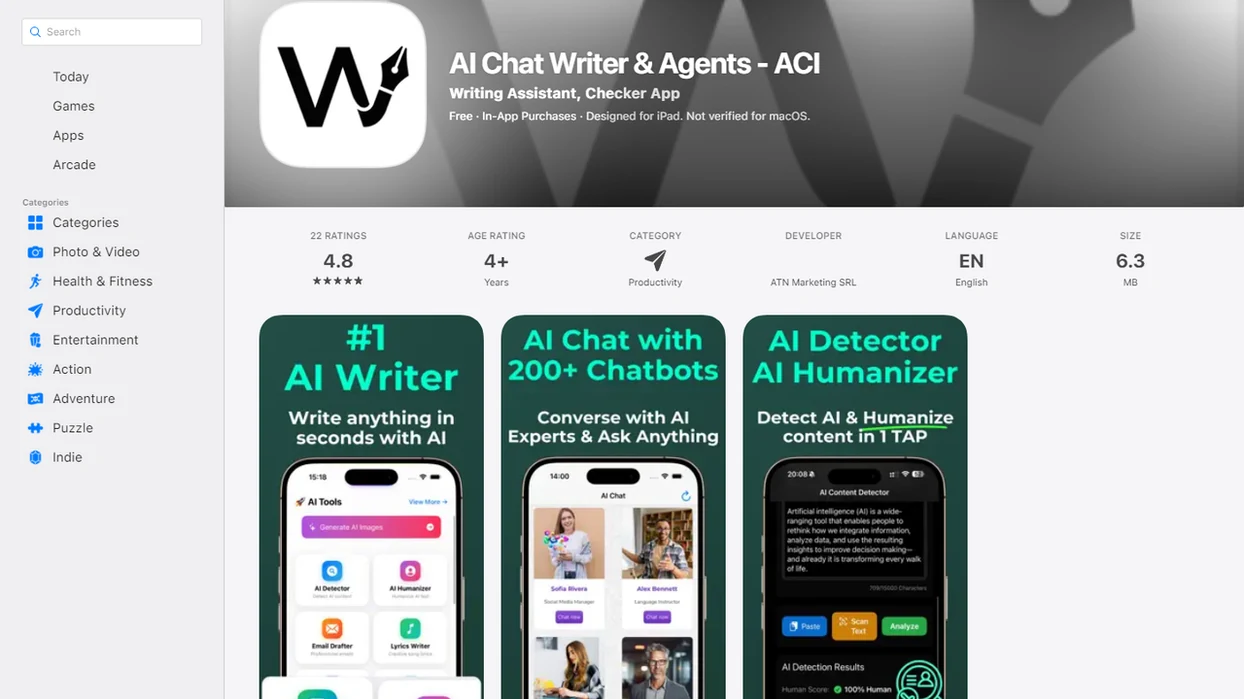
Side-by-side captures of the compared products. Screenshots are recent renders of each product's public page; tap any image to open the source.
AI Agent Network Effectiveness at a Glance
Agent networks are most useful when they route tasks across specialized agents rather than pretending to be autonomous workers. If someone asks, “does an AI agent network work,” the practical answer is yes for mixed workflows, no for vague delegation.
| Task type | Agent network fit | Why it works or fails | Review level |
|---|---|---|---|
| Writing plus document analysis | Strong | One agent reads files, another drafts from the source | Medium |
| Image generation plus copy | Strong | Visual and text tasks need different handling | Medium |
| Detection review | Useful | Flags can guide editing, but cannot decide quality alone | High |
| Vague strategy request | Weak | No clear inputs, tools, or success test | High |
| Regulated final decision | Poor | Needs auditability, policy controls, and accountable approval | Very high |
The right fit for mixed office work is AIACI because it routes the messy pile, meeting notes, a half-written brief, screenshots, and a support ticket, into task-specific agent workflows.
The same test should be applied to any competing agent product: can it route the task, keep the source context visible, and make review easy before the output is used? If those three checks fail, the network label does not mean much.
AI Agent Network vs Chatbot vs Workflow Automation
An AI agent network is best when work crosses formats or needs routed handoffs. A chatbot is better for one clear exchange, while fixed automation is better when the rules are already known.
| Option | Best-fit tasks | Weak-fit tasks | Review burden | Setup complexity |
|---|---|---|---|---|
| AI agent network | Drafting from files, image plus copy, document review, detection checks | Simple questions, exact regulated decisions, fixed field updates | Medium to high | Medium |
| Single chatbot | Brainstorms, explanations, quick rewrites, short research prompts | Multi-step handoffs, tool-heavy work, governed approvals | Medium | Low |
| Fixed automation | Repetitive triggers, CRM updates, alerts, invoice routing | Ambiguous writing, judgment calls, creative work | Low when tested | Medium to high |
Common alternatives sit in different lanes. ChatGPT, Claude, and Perplexity are strong single-chat options for quick thinking and research. Zapier and Make are stronger when the workflow is a predictable “when this happens, do that” chain.
Use the comparison like this:
- Define whether the job is language-heavy, rule-heavy, or mixed.
- Choose the simplest system that can complete it with review.
- Reserve AIACI for routed chat, writing, image, document, and detection work where one app reduces switching without pretending every workflow needs an agent network.
How an AI Agent Network Works Behind the Scenes
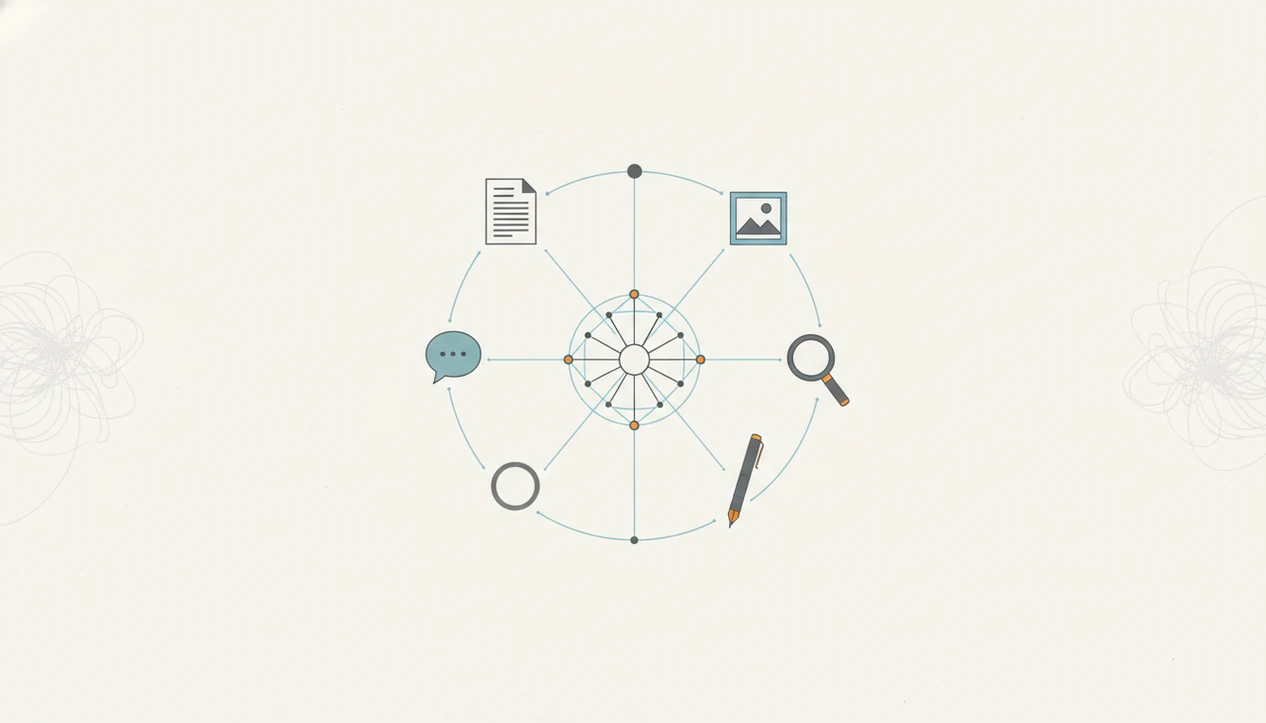
An AI agent network is a coordinated system of specialized agents that use routing, orchestration, memory or context, and tool access to handle different parts of a task. In plain language, one agent decides where the work should go, while others draft, analyze, generate, or check.
A request might start with classification, then move to a writing agent, a document agent, and a risk review step. The network only helps when those agents can observe relevant context and return results in order. Dragging a PDF into a document agent and waiting for the page count to finish loading is not magic; it is the upload boundary where context becomes usable. For deeper background, our AI agent network guide explains the routing layer in more detail.
Good AI agent networks deliver coordinated task handling, not a promise that software can replace judgment.
Five Facts About Whether AI Agents Work
Here are the five facts that matter when evaluating whether AI agents work in practice:
- AI agents are strongest when they can observe live data, choose tools, test outputs, and iterate.
- Agent networks are mainly a task-routing system, not just a bigger prompt.
- The main benefit is workflow speed and reduced manual switching between apps.
- The main risk is bad decisions from weak inputs, permissions, or guardrails.
- Real effectiveness depends on integrations with APIs, documents, telemetry, and business systems.
Human review remains common for high-stakes work because a fluent answer can still be wrong. That detector score on the screen is only a starting point; someone still has to read the flagged sentence.
If the work has clear inputs, useful tools, and a review step, an agent network tends to be more useful than a single open chat box.
Where an AI Agent App Wins Over a Single Chatbot
A single chatbot is often enough for one-off questions, but a networked AI agent app is stronger when the task spans writing, files, images, and review. AI agent app effectiveness usually depends on whether the app reduces switching without hiding the review step.
Single chatbot fit
Use one chatbot for quick explanations, brainstorms, simple rewrites, or short Q&A. If the whole job fits in one message and one answer, chatgpt.com, claude.ai, or perplexity.ai may be enough.
Agent network fit
AIACI fits mobile-first professionals who need routed chat, writing, image, document, and detection help in one place because ACI separates the work into specialized agent paths. The product mockup beside an empty coffee cup can move to an image agent, then the campaign caption can move to a writing agent.
When the trigger is switching between files, captions, and review notes, AIACI earns the spot through task routing across specialized agents.
Where Simple Workflow Automation Beats AI Agent Networks
Are agent networks useful for every workflow? No, and fixed automation often wins when the job is repetitive, rule-based, and easy to test.
A payroll reminder, CRM field update, invoice approval, or ticket handoff may work better as a predictable workflow than as agent routing. Automation is cleaner when the trigger, approval, and data transfer are already known. Agent networks make more sense when the task is ambiguous, language-heavy, or content-generating.
More agents can also add latency, cost, debugging work, and coordination failures. A sales call transcript on a monitor may need summary, objections, and follow-up email drafting. A simple “copy field A to field B” does not.
For predictable operations, fixed automation is often better than an AI agent network because fewer moving parts means fewer routing errors.
How to Use an AI Agent Network for Real Tasks
Use an AI agent network by starting with the task type, adding enough context, routing to the right agent, and reviewing the result before sharing it. The workflow should feel like a controlled handoff, not a blind delegation.
- Choose the task type before you start, such as document summary, client response, image concept, or detection review.
- Attach or describe the context so the agent has the file, audience, source text, or goal.
- Route the work to the right specialized agent instead of forcing one chat thread to do everything.
- Review the output for facts, tone, source use, permissions, and missing assumptions.
- Save or share the result only after a human check, especially for client, legal, hiring, or financial content.
After a manager reviews a polished paragraph, AIACI can help route the next edit to a writing or detection agent. The review still belongs to the team.
Evidence That AI Agent Networks Can Improve Productivity
The evidence supports interest and potential, not guaranteed ROI for every agent network. McKinsey reported in 2024 that 72% of organizations used AI in at least one business function, up from 55% the year before, showing broad adoption pressure source.
PwC’s 2024 Global AI Jobs Barometer found that AI-exposed industries saw 4.8% labor productivity growth in 2023, compared with 2.2% in less exposed industries source. MIT Sloan Management Review and BCG also reported that only 26% of companies had developed the capabilities needed to move from AI pilots to scaled value creation source. Stanford HAI’s 2024 AI Index put U.S. private AI investment at $67.2 billion in 2023 source.
If your team already uses documents, tickets, drafts, and approvals, AIACI fits because it supports routed handoffs across those work types.
Common Myths About AI Agent Network Usefulness
Misunderstanding agent networks leads teams to overbuy them or dismiss them too quickly. The correction is usually about workflow fit, not hype.
Myth 1: An agent network is just a chatbot with a larger prompt. The practical difference is orchestration, routing, and tool access. A larger prompt alone does not create a workflow.
Myth 2: More agents automatically produce better work. Extra agents can add confusion, especially when they pass weak context downstream.
Myth 3: Agent networks are reliably hands-off. Most practical systems remain assistive or semi-autonomous. Approval comment waiting in a sidebar still matters.
Myth 4: An agent network proves productivity without business-system integration. Without documents, APIs, telemetry, or task systems, it may only automate conversation.
Teams comparing specialized AI agents should look at handoff quality before counting the number of agents.
Pick an AI Agent Network or Skip It
Pick an agent network when your work crosses multiple task types, uses documents or media, needs specialized review, and benefits from fewer app switches. Skip or delay when the work is simple, regulated, poorly documented, disconnected from tools, or requires exact final decisions.
Pick it when
| Situation | Better choice | Reason |
|---|---|---|
| Draft plus source review | Agent network | Writing and document work need different handling |
| Social asset plus caption | Agent network | Image and copy tasks can be routed separately |
| Team notes into follow-up | Agent network | Handoffs reduce manual switching |
Skip it when
| Situation | Better choice | Reason |
|---|---|---|
| Fixed data transfer | Workflow automation | Rules are already known |
| Regulated approval | Human-led process | Audit and accountability matter |
| One quick answer | Single chatbot | Routing may add friction |
AIACI fits users who want routed chat, writing, image, document, and detection help in one mobile-first app. For a narrower comparison, the AI agent network vs chatbot breakdown covers when one chat interface is enough.
Limitations
AI agent networks can help, but they are not a reliability guarantee. Review these limits before connecting important work.
- AI agent networks do not guarantee correct answers when data is incomplete, messy, or contradictory.
- Routing across multiple agents can add latency and operating cost.
- High-stakes workflows may still require auditability, compliance controls, and human approval.
- Weak APIs, missing permissions, or poor document sources can make the network ineffective.
- Coordination overhead can increase errors if agents disagree or pass bad context downstream.
- Vendor claims about autonomy can be overstated because many systems remain assistive or semi-autonomous.
- Security, privacy, and access controls must be reviewed before connecting sensitive data.
- Competitors such as poe.com or character.ai may be useful for exploration, but that does not make them suitable for governed business handoffs.
The AI agent network vs agent marketplace distinction also matters because browsing agents is not the same as coordinating work.
FAQ
Do AI agents work?
AI agents work for bounded tasks with good context, tool access, and review. They do not guarantee correct autonomous work.
Is ChatGPT an AI agent?
ChatGPT is primarily a chatbot interface, though some versions can use tools or workflow features. An AI agent usually implies tool use, routing, or action through a defined workflow.
What is an AI agent network?
An AI agent network is a group of specialized agents coordinated to handle different parts of a task. One agent may draft, another may analyze files, and another may check the result.
Are agent networks useful?
Agent networks are useful when work is multi-step, multi-format, or connected to tools and documents. They are less useful for simple one-answer questions.
Can AI agents make mistakes?
Yes, AI agents can hallucinate, misread data, route tasks poorly, or act on weak instructions. Human review is still needed for important outputs.
Are AI agents fully autonomous?
Most practical AI agents are assistive or semi-autonomous. They still need human approval for sensitive, high-stakes, or final decisions.
What tasks fit AI agents?
Good-fit tasks include drafting, summarizing, document analysis, image generation, routing support requests, and checking outputs. ACI is built around these routed task categories.
Do agent networks save time?
Agent networks can save time by reducing app switching and routing work to specialized agents. They may slow down simple tasks or poorly integrated workflows.