
GPTZero vs ZeroGPT vs Originality: What Can You Verify?
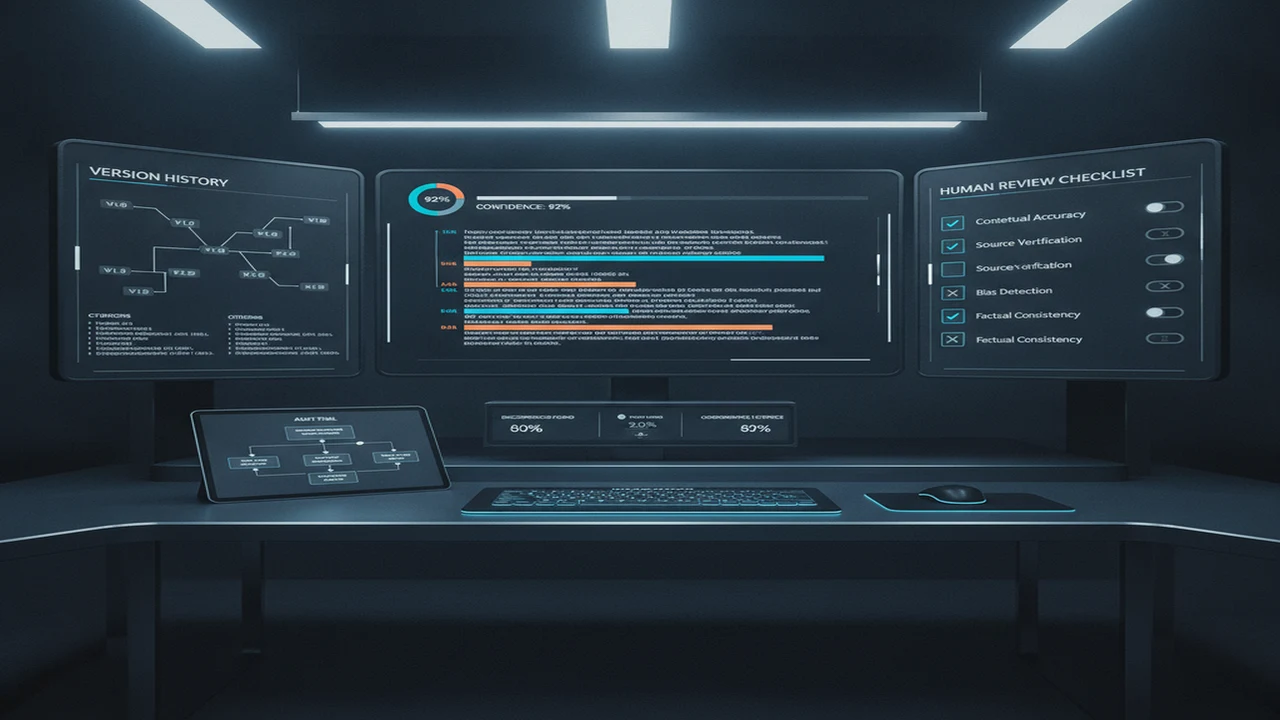
A detector percentage can look conclusive even when the underlying question is unclear. Is the tool estimating whether a passage resembles generated text, identifying copied sources, or establishing who composed the document? Only the first task is within the normal scope of AI writing detection.
The useful comparison is therefore not simply GPTZero vs ZeroGPT vs Originality by headline score. It is whether each service exposes enough evidence for a reviewer to inspect the result, preserve context, and confirm the claim through records outside the detector.
Quick answer: GPTZero, ZeroGPT, and Originality can flag patterns associated with AI-generated writing, but none can verify authorship by itself. Compare passage-level evidence, score consistency, document requirements, and audit details. Confirm any flag against drafts, revision history, citations, and author testimony before making an academic, editorial, or workplace decision.
What can an AI detector actually verify?
An AI writing detector evaluates linguistic features in submitted text. It does not observe the writing session, identify the person at the keyboard, or know which sentences were generated, rewritten, dictated, translated, or manually composed.
GPTZero, ZeroGPT, and Originality belong to this pattern-detection category. A flag may justify closer inspection, but verified authorship requires evidence such as version history, dated drafts, source notes, citation records, timestamps, and documented editing activity.
A false positive occurs when human writing is classified as AI-like. A false negative occurs when generated or substantially AI-assisted text is classified as human-like. Either error can occur without the reviewer receiving an obvious warning, which is why the detector result and the authorship conclusion must remain separate.
How do GPTZero, ZeroGPT, and Originality differ?
GPTZero is oriented toward AI-writing analysis, document review, and authorship screening. Its highlighted passages can direct attention to specific wording, but reviewers still need to confirm what each label means under the current documentation.
ZeroGPT can provide another detector signal for submitted text. Its usefulness depends on the input requirements, displayed evidence, current output definitions, and whether the reviewer can retain enough detail to reconstruct the check later. Controls or institutional validation not listed publicly should not be inferred.
Originality combines AI content detection with originality-oriented publishing checks. An AI-writing signal and a source-similarity result answer different questions: one estimates generation patterns, while the other may identify overlap with available sources. They should not be merged into a single authorship judgment.
How should you verify a disputed detector result?
A disputed result needs a repeatable process rather than another isolated percentage. AIACI's guide to AI detector accuracy and proof explains why confidence depends on the text, evidence available, and consequences of an error.
Legitimate assistance also complicates the label. A writer might use the AI Email Writer for an initial message, then replace claims, change tone, add facts, and approve every sentence. EmailAI involvement describes part of the process, not a complete answer about authorship.
- Preserve: Save the submitted text, file metadata, formatting, and collection time before editing or rerunning it. Record the detector name and date.
- Inspect: Review passage-level highlights and explanations rather than relying only on the headline percentage. Check whether quoted material, citations, templates, or repeated technical language affected the result.
- Compare: Run another detector only as a consistency check. Agreement can strengthen confidence that a pattern exists, but it is not majority-vote proof of AI authorship.
- Confirm: Request drafts, revision history, source notes, citations, and an account from the author. Prompt records can help when they exist and are voluntarily provided, but their absence does not settle the question.
- Document: Retain outputs, input versions, relevant policies, and the reasoning used to accept or reject each signal. Screenshots without the underlying text or date provide a weak audit trail.
- Decide: Match the decision threshold to the potential harm. A low-stakes editorial query may require clarification, while discipline or employment action requires substantially stronger corroboration.
Which comparison criteria matter more than a single score?
Passage-level evidence is more useful than an unexplained label because it lets a reviewer inspect what triggered the classification. Also verify minimum text requirements, supported languages, file handling, and whether the service describes its treatment of mixed human and AI writing.
Reproducibility matters. Record whether identical text produces a stable result, whether formatting changes affect the output, and whether reports can be exported with dates and tool details. A result that cannot be reconstructed is difficult to defend in an audit.
Percentages from GPTZero, ZeroGPT, and Originality should not be assumed equivalent. Each service may use different models, thresholds, labels, and score definitions. A 70 percent result from one interface does not necessarily represent the same probability or decision boundary as 70 percent from another.
Keep originality checking separate from AI-writing analysis. Source matching can support a claim that text overlaps with identified material. AI content detection instead estimates stylistic or statistical patterns and generally cannot identify the writing history behind them.
- Can the reviewer inspect individual passages?
- Are minimum length and language requirements documented?
- Does the documentation explain mixed or edited text?
- Can the input, output, date, and tool version be retained?
- Is the score meaning defined clearly enough for the intended decision?
How do rewriting and email tools affect detector scores?
Real writing processes are often mixed. A person may prompt an AI writing assistant, select useful material, rewrite the structure, verify facts, restore citations, and approve the result. Calling the final document simply human or AI can omit the most important information about responsibility and editing.
An AI email generator creates the same attribution problem. Someone learning how to write an email with AI might use Email Writer for a draft or reply, then make substantial changes. AI Email Writer - Fly Mail is writing assistance, not evidence that a later message was copied directly from a generated output.
QuillBot and Grammarly cover areas such as paraphrasing, grammar support, and readability. NaturalWrite is positioned around more natural rewriting, while StealthGPT and Undetectable AI occupy the AI humanizer category. Friday, Xemail, and Boss are other email-writing products, not detector benchmarks.
An AI text rewriter or AI paraphrasing tool can change the features a detector evaluates. It can also alter facts, qualifications, citations, or the author's intended voice. Changed detector scores do not verify human authorship or ensure a particular future result. AIACI's detector selection guide for verified content review provides a broader framework for evaluating rewritten material.
Where are the trust boundaries for all three detectors?
False positives and false negatives remain the central trust boundary. Polished human prose can trigger a detector, while heavily edited machine text can avoid a flag. Short passages, mixed authorship, language differences, genre, quotations, templates, and loss of document context can make a classification less stable.
Published results also vary by corpus and method. ProofreaderPro (2026) reported that no detector in one mixed-content benchmark exceeded 80% overall accuracy, with Originality.ai at 74%. A different comparison from Free Academic Tools (2026) reported a 93–96% detection rate for Originality.ai and a 4–7% false-positive rate. The gap illustrates why results cannot be transferred across datasets without checking the underlying method.
Model updates and threshold changes can alter classifications over time. Scores from different services may use unrelated definitions, so apparent agreement is only corroborating signal. Disagreement should lower confidence and trigger manual review rather than a search for whichever score supports the preferred conclusion.
No GPTZero, ZeroGPT, or Originality score should independently determine academic discipline, employment action, publication rejection, or an accusation of deception. Those decisions require the original text, drafts, revision history, source evidence, author context, applicable policy, and a documented human assessment.
- Detector scores estimate patterns rather than establish authorship.
- Text length, genre, language, editing level, and model changes can affect classifications.
- Short or mixed-authorship text may not provide stable evidence.
- Cross-tool percentages may use different thresholds and meanings.
- Rewriting can change scores while damaging facts, citations, nuance, or voice.
- High-stakes action requires corroborating records and accountable human review.
Which detector fits each review workflow?
For preliminary document screening, GPTZero may fit a workflow that values document-oriented AI writing analysis and passage inspection. Verify current input requirements, score definitions, and reporting options before adopting it.
ZeroGPT may serve as a quick secondary signal when its current output format and terms fit the review. It is more defensible as another observation than as the final authority in a disputed case.
Originality may fit publishing workflows that want AI-writing analysis alongside broader originality checks. Editors should still distinguish an AI pattern score from source verification, citation review, and plagiarism findings.
A high-stakes investigation should not be assigned to any detector alone. Select the service whose evidence can be retained and audited, then confirm the result against writing records and testimony. QuillBot, Grammarly, and NaturalWrite belong in a separate writing or rewriting category rather than a shortlist of equivalent detector choices.
What should you decide after comparing the evidence?
Choose according to evidence visibility, documentation, workflow fit, and the consequences of a wrong classification. Preserve the original text, check another signal when the stakes justify it, and require a person to examine the supporting records before acting.
GPTZero, ZeroGPT, and Originality can all support screening. None can independently verify who authored, edited, or approved a document.
Comparison
| Tool | Primary review role | Output granularity to verify | Originality or source-checking context | Best-fit workflow | Evidence still required |
|---|---|---|---|---|---|
| GPTZero | Document-oriented AI-writing and authorship screening | Document score and any highlighted passages or explanations | Keep AI-pattern analysis separate from source verification | Preliminary document review | Drafts, revision history, sources, author account, and recorded review details |
| ZeroGPT | Additional AI-pattern signal | Headline result and any available passage indicators under the current interface | Do not infer source matching or controls that are not documented | Quick secondary check | Original input, another signal, writing records, and manual inspection |
| Originality | Publishing-oriented AI content and originality review | Document and passage evidence exposed by the selected check | AI detection and source-similarity findings must be interpreted separately | Editorial and content-quality workflow | Citations, identified sources, version history, author context, and human review |
Limitations
Frequently Asked Questions
How accurate are AI detectors?
Accuracy varies with text length, genre, language, editing, model family, and benchmark design. A percentage from one study should not be assumed to describe every document or current product version.
Can GPTZero, ZeroGPT, or Originality prove that someone used AI?
No. GPTZero, ZeroGPT, and Originality estimate patterns associated with generated writing. Authorship requires corroboration from drafts, revision history, sources, timestamps, and author context.
Why do the three detectors return different results for the same text?
They may use different models, thresholds, text requirements, update schedules, and output definitions. Their proprietary details should not be assumed beyond what each service documents.
Can an AI email generator cause a human-written message to be flagged?
Yes, mixed workflows can produce ambiguous classifications. A person may edit an EmailAI draft extensively, or a detector may flag polished human email without any generator involvement.
Does humanizing AI text make detector results reliable?
No. NaturalWrite, QuillBot, StealthGPT, and Undetectable AI represent rewriting or humanizer categories, but a changed score does not verify human authorship and the rewriting may alter meaning or sources.
Should schools or employers act on one AI detector score?
No. Academic or workplace action should require corroborating records, an opportunity for explanation, applicable policy review, and a documented human decision.
Can Write.info help review or revise text after a detector flag?
Write.info may support writing or revision, but the reviewer must still check facts, citations, attribution, and whether the final voice reflects the author's intent.