

Best Rock Identifier Apps in 2026
Quick answer: AI Rock ID is the best rock identifier app for most iPhone users because it covers rocks, minerals, crystals, gemstones, fossils, and value estimates, with five free scans per day. Rock Identifier: Stone ID suits Android users and older iPhones. Choose Rockd when you need geology maps and field notes, not a simple photo result.
You pick up a banded stone on a beach, photograph it in the parking lot, and get three possible names from a web search. A rock identification app can narrow the list before you start checking hardness, streak, and local geology.
Photo results are estimates. Lighting, weathering, polish, mixed minerals, and viewing angle can all change the answer, so valuable or unusual specimens still need physical testing.
Comparison at a glance
| App | Best for | Platforms | Free version | Price | Standout |
|---|---|---|---|---|---|
| AI Rock ID | Best overall | iPhone and iPad | 5 scans per day | $4.99 weekly or $29.99 yearly | Covers rocks, fossils, gemstones, and value estimates |
| Rock Identifier: Stone ID | Older phones and broad language support | iPhone, iPad, and Android | Limited daily scans; exact quota unknown | In-app purchases listed from $3.99 to $69.99 | 14 languages and iOS 15 support |
| Crystalyze | Spiritual crystal collections | iPhone and iPad | Free download; scan limit unknown | Monthly listings from $2.99; annual from $19.99 | Crystal filters, moon calendar, and private notes |
| Crystal Identifier | Quick crystal checks on the web | Web | 1 free scan per day | Check the listing | Crystal-focused result fields |
| Rock & Crystal Identifier | Crystal reference and shopping | iPhone, iPad, and Android | Free access advertised; exact scan count unknown | $1.99 weekly, $5.99 monthly, or $29.99 yearly | Identifier, collection catalog, and crystal store |
| Rockd | Geology maps and fieldwork | iPhone, iPad, Android, and web | Maps and field tools are free | Free | More than 290 geologic maps |
| AllScan AI | Identifying rocks and other objects | Web | 1 free web scan; further limits unknown | Check the listing | Scans rocks, plants, animals, coins, and products |
| Mindat | Verifying minerals and localities | Web and mobile web | Web reference access without per-scan charges | Free web access; other costs unknown | Mineral species, locality, and occurrence records |
Prices and ratings from the US App Store and Google Play, checked October 2026. Store prices change; the listing is the final word.
How we picked
We read the supplied US App Store listings, official developer sites, published pricing pages, and available platform research in October 2026. The order favors useful identification scope, a known free allowance, relevant result details, current software support, and honest pricing. Store ratings helped show how much public feedback exists, but they weren't treated as proof of identification accuracy.
- The app covers the specimens you may find.
- Free limits and paid prices are stated plainly.
- Results include useful mineral or geological details.
- Platform and operating-system requirements fit your phone.
- Maps, collections, or reference records add real value.

AI Rock ID
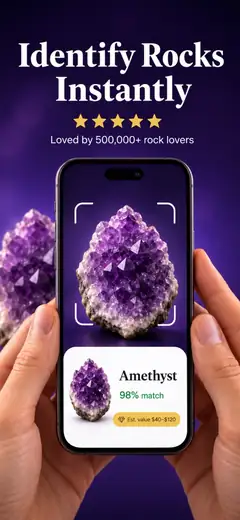
AI Rock ID is a focused rock identifier for photos of rocks, crystals, minerals, gemstones, and fossils. Its App Store listing says results can include classification, formation, Mohs hardness, composition, likely look-alikes, rarity, and estimated value ranges. That is a useful mix for someone who wants more than a possible specimen name.
The deciding fact is the free allowance: five scans per day. That is enough for a short hike, gem show, or afternoon sorting an old collection. You can also save finds into a collection. The App Store version costs $4.99 weekly or $29.99 yearly when you need more scans.
There is less public history here. AI Rock ID had 4.6 stars from 576 US App Store ratings in October 2026, while Stone ID had 81,888 ratings. Still, AI Rock ID ranks first because its stated free quota, fossil coverage, mineral data, collection tools, and lower listed annual price form the best package in this group.
- Five free scans every day
- Includes fossils, mineral properties, look-alikes, and value ranges
- Requires iOS 18.0 or later and has no confirmed Android version
- Price
- October 2026: $4.99 weekly or $29.99 yearly
- Platforms
- iPhone and iPad; iOS 18.0 or later
Pick AI Rock ID if you want one iPhone app for rocks, crystals, gemstones, minerals, and fossils.
AI Rock ID rock identifier app for iPhoneAI Rock ID listing on AIACI
Rock Identifier: Stone ID
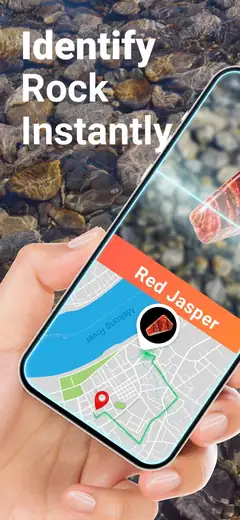
Rock Identifier: Stone ID is the biggest direct rival here by US App Store rating count. It scans rocks, crystals, minerals, and gemstones, then supplies reference details such as chemical formula, hardness, color variation, and common locations. The developer says its catalog covers more than 6,000 specimen types.
Stone ID has two clear wins. It runs on iOS 15.0 or later, so it supports older iPhones that can't install AI Rock ID. It also lists 14 languages and has a confirmed Android version. Those are meaningful differences if you share identifications with family members or switch between phone platforms.
Its store page also describes real-versus-fake educational articles and a metal detector based on magnetic-field readings. Those extras may appeal to casual collectors, though they don't confirm a specimen's identity. The free tier has limited daily identifications, but the exact quota is unknown. Its US listing showed several premium purchases from $3.99 to $69.99 without a simple schedule, so inspect the Apple or Google checkout screen before subscribing.
- Supports iOS 15 and Android
- Has 14 languages and a large reference catalog
- Current free quota and plan periods aren't stated plainly
- Price
- October 2026: in-app purchases listed from $3.99 to $69.99; check checkout terms
- Platforms
- iPhone, iPad, and Android
Pick Rock Identifier: Stone ID if you have an older iPhone, use Android, or need a language beyond English.

Crystalyze

Crystalyze is a crystal identifier with collection and spiritual-reference tools. It can scan a crystal, rock, or stone from a photo, but its strongest distinction is what comes next: you can browse more than 175 crystal entries by chakra, zodiac sign, element, intention, or other metaphysical categories.
Premium adds unlimited identifier use, permanent scan history, personal notes, and own, favorite, and wishlist collections. There is also a moon calendar and material about cleansing, numerology, and affirmations. If your collection is tied to meditation or ritual, Crystalyze has a better fit than geology-first apps such as Rockd or Mindat.
The US App Store showed 4.75 stars from 3,422 ratings and an update dated October 6, 2026. Pricing is less tidy: listed monthly purchases ranged from $2.99 to $5.99, and annual purchases ranged from $19.99 to $34.99. Check the displayed plan before approving payment. The listing doesn't state the free scan quota, and spiritual descriptions don't verify medical effects or mineral identity.
- Filters crystals by spiritual and astrological categories
- Premium includes notes, lists, and lasting scan history
- Free scan count is unknown, and no Android version is confirmed
- Price
- October 2026: monthly listings from $2.99; annual listings from $19.99
- Platforms
- iPhone and iPad; iOS 15.0 or later
Pick Crystalyze if spiritual references and personal crystal lists are more useful to you than field geology.
Crystal Identifier
Crystal Identifier is a web-based crystal identification tool. Upload a JPG, PNG, WebP, or HEIC image, and its published result format covers a possible name, crystal system, Mohs hardness, formation type, and estimated value. The site accepts rough specimens, clusters, polished stones, and tumbled pieces.
This is the narrowest crystal-focused pick. You don't need to install a broad object scanner just to check a piece of quartz, fluorite, calcite, or agate. The page also explains why purple color alone can't separate amethyst from fluorite or lepidolite; crystal habit, transparency, cleavage, and luster can change the likely match.
There are firm limits. The site states one free scan per day. Paid terms are also unknown. A photograph cannot measure hardness, specific gravity, or refractive index. Use the result as a shortlist, then compare physical properties or consult a gemologist for an expensive stone.
- Focused result fields for crystals and minerals
- Works in a browser without a dedicated download
- One free scan daily and no confirmed native mobile listing
- Price
- October 2026: 1 free scan per day; paid price unknown
- Platforms
- Web
Pick Crystal Identifier if you want a quick browser-based crystal estimate without sorting through unrelated tools.
Rock & Crystal Identifier (Crystal Council)
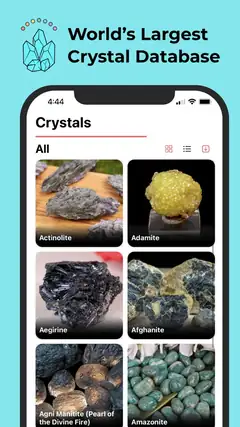
Rock & Crystal Identifier combines photo identification with the Crystal Council's crystal reference material. The listing says its database has more than 6,000 rocks and crystals, with entries covering physical characteristics, history, and spiritual associations.
Its collection tools are the strongest reason to choose it. You can save scanned specimens, add origin details and notes, and organize stones by category or meaning. The same app connects to a store selling related specimens. That direct path from identification to shopping is unusual here, though you should never use a photo result alone to decide that an expensive item is authentic.
The US App Store showed 4.57 stars from 2,779 ratings. Listed plans were $1.99 weekly, $5.99 monthly, and $29.99 yearly. Free use is advertised, but the current identification quota is unclear in the supplied material; confirm access before starting a subscription. The app also runs on Android, giving it a platform advantage over the iPhone-only specialist apps. I'd choose it for cataloging a crystal collection, not for mapping bedrock on a field trip.
- Combines identification with notes and collection records
- Available on iPhone, iPad, and Android
- The exact free scan allowance is unknown
- Price
- October 2026: $1.99 weekly, $5.99 monthly, or $29.99 yearly
- Platforms
- iPhone, iPad, and Android
Pick Rock & Crystal Identifier if you want identification, collection records, and crystal shopping in one place.
Rockd
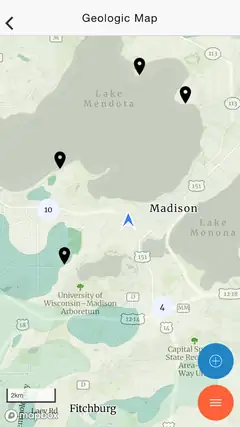
Rockd is a geology field app from the Macrostrat lab at the University of Wisconsin-Madison. It uses your location to show geological context, including mapped units, height above sea level, stratigraphic columns where available, and related published literature. Its catalog includes more than 290 geologic maps.
This app answers a different question from a camera-based rock identifier: what geology surrounds the place where you found the specimen? You can cache maps, add observations offline, record strike and dip, view paleogeographic maps, and keep a private or shared field record. For geology students and active rockhounds, locality context can be more informative than a single image match.
Rockd is free, with no in-app purchases listed in the supplied US App Store record. It runs on iPhone and iPad, and Android and web access are also confirmed. The tradeoff is simple: Rockd isn't the easiest choice when you have an unknown stone on a kitchen table and want an instant name. Use Rockd in the field, then verify the specimen with a reference database or physical tests.
- More than 290 geologic maps with offline caching
- Records field observations, orientation, and locality context
- Photo identification isn't its main job
- Price
- October 2026: Free
- Platforms
- iPhone, iPad, Android, and web
Pick Rockd if you collect in the field and need maps, geology context, and observation tools.
AllScan AI
AllScan AI is a general image scanner that includes rocks among many supported subjects. Its published categories also cover plants, animals, insects, coins, food, antiques, and products. That breadth is useful when your camera roll contains more than mineral specimens.
The scanner uses a photo as the search input, which helps when you can't describe the object well enough for a text query. For rocks, good light, a plain background, and a specimen that fills the frame give the system more visual detail. AllScan AI is a starting point for a likely name; it doesn't supply the field maps of Rockd or the deep locality records of Mindat.
The web page states that one free scan is available. Further limits, paid pricing, and current native app-store terms weren't verified in the supplied material, so check the listing before spending money. I'd skip it if rocks are your only subject because AI Rock ID has more relevant result fields. Choose AllScan AI when one broad scanner is more convenient than keeping separate apps for every category.
- Recognizes rocks and many unrelated object categories
- Works from a photo in a web browser
- Rock-specific depth, further free limits, and paid terms are unknown
- Price
- October 2026: 1 free web scan; check the listing for paid terms
- Platforms
- Web; current native platforms not verified
Pick AllScan AI if you want one visual scanner for rocks, plants, animals, coins, and everyday objects.
Mindat
Mindat is a web mineral database, not a one-tap camera scanner. It has mineral species records, locality data, occurrence information, photographs, and known mineral associations. Once another app suggests a name, Mindat is often the more useful place to check whether that mineral fits the location and appearance.
Its biggest strength is specificity. A search can connect an accepted mineral name to documented mines, regions, associated species, and specimen photos. That helps when two minerals look alike but one has no recorded occurrence near where you found the sample. Collectors researching labels or purchase claims will also get more context than a short AI result usually provides.
Mindat works on the web and mobile web, with access available without a per-scan fee. A current native iPhone or Android app wasn't verified from the supplied sources. There is also no simple photo workflow described here, so beginners may find it slower than a rock identifier app. Use Mindat as the verification step: start with a likely identification, then compare locality, crystal form, associations, and photos before accepting the answer.
- Detailed mineral, locality, and occurrence records
- Useful for checking a camera app's proposed identification
- No confirmed native app or simple one-photo identification flow
- Price
- October 2026: Free web access; other costs unknown
- Platforms
- Web and mobile web
Pick Mindat if you already have a possible mineral name and want to check locality and occurrence records.
AI Rock ID vs. Rock Identifier: Stone ID
These two apps compete most directly. AI Rock ID has the better stated free allowance and a lower clearly listed annual price; Stone ID has broader device and language support.
| Point | AI Rock ID | Rival |
|---|---|---|
| Free identification | 5 scans per day | Limited daily scans; exact quota unknown |
| Minimum iOS version | iOS 18.0 | iOS 15.0 |
| Android | No confirmed Android version | Android confirmed |
| Languages | 1 listed language | 14 listed languages |
| Published scope | Rocks, minerals, crystals, gemstones, fossils, and value ranges | Rocks, minerals, crystals, gemstones, reference articles, and metal detector |
| Listed annual price | $29.99 yearly | Several purchases listed; exact plan mapping unclear |
AI Rock ID is my pick for an iPhone that supports iOS 18 because its five daily scans and focused specimen data are easy to understand before you pay.
Stone ID wins for Android, older iPhones, and language choice. If any of those apply to you, it is the better download despite its less transparent purchase list.
What to check before downloading a rock identifier
How the app handles uncertain results
A photograph can't test hardness, streak, density, magnetism, or reaction to acid. Check whether the app gives look-alikes or supporting properties instead of only one confident-sounding name. For a valuable gemstone, meteorite claim, or unusual mineral, compare the answer with physical tests and locality records. An app result alone isn't enough for authentication, appraisal, buying, or selling.
Which specimens it covers
Some apps focus on crystals; others include ordinary rocks, minerals, fossils, gemstones, or meteorites. Match the scope to what you collect. A crystal identifier can be useful at a gem show, while Rockd is better beside an outcrop. Photograph the specimen in natural light from several angles, with the subject filling most of the frame.
The real free limit and renewal price
Free download doesn't mean unlimited identification. Look for a daily scan count, trial length, renewal period, and the exact screen showing what will be charged. Weekly plans become expensive fast. AI Rock ID states five free scans daily and lists $4.99 weekly or $29.99 yearly; several rivals publish less tidy purchase menus.
Records, maps, and privacy controls
A saved collection helps if you're labeling boxes of specimens. Maps and offline notes are more useful during fieldwork. Also check photo, location, and file permissions before uploading anything. If an app doesn't explain deletion or storage, avoid sending images that reveal a private collecting site, home address, purchase receipt, or other personal information.
Frequently asked questions
What should I look for in a rock identifier app?
Choose an app that covers the rocks, minerals, crystals, gemstones, fossils, or meteorites you collect. Compare its free scan limit, renewal price, device requirements, result details, maps, and collection tools.
Are free rock identifier apps good enough, or should I pay?
Free access can be enough for occasional checks, but scan limits vary and a free download may offer only limited identifications. Before paying, check the daily quota, trial length, renewal period, and exact checkout price.
How accurate are rock identifier apps?
Photo results are estimates because lighting, weathering, polish, mixed minerals, and viewing angle can affect the match. Compare the result with hardness, streak, crystal form, locality, and other physical properties.
Can I use a rock identifier app offline without sharing private information?
Rockd supports cached maps and offline field observations, but offline photo identification was not confirmed for the camera scanners. Review photo, location, and file permissions, and do not upload images that reveal a private collecting site, home address, receipt, or other personal information.
Should I choose a rock identifier app for Android or iPhone?
Rock Identifier: Stone ID supports Android and iPhones running iOS 15 or later. AI Rock ID requires iOS 18 or later, and no Android version was confirmed.
Which rock identifier app is best for field geology or a crystal collection?
Choose Rockd for geology maps and field notes, or Mindat for checking mineral localities and occurrence records. Crystalyze better suits spiritual crystal collections with filters, notes, lists, and a moon calendar.
How does a rock identifier app work?
A camera scanner uses a specimen photo as the search input and returns a likely name or shortlist with available reference details. You should then compare the suggestion with physical properties, specimen photos, and local geology.
The best rock identifier app for most people
Download AI Rock ID if you use a compatible iPhone or iPad. Five free daily scans, broad specimen coverage, saved collections, and a clearly listed $29.99 annual plan give it the best balance here.
Choose Stone ID for Android or older iPhones, and use Rockd when maps are the main reason you're carrying your phone into the field.