

Best Antique Identifier Apps in 2026
Quick answer: Antique Identifier TIQ is the best antique identifier app for most iPhone users because it combines photo identification, rough value ranges, comparable examples, and authenticity clues for $19.99 a year. AntiqSnap suits buyers who want a much larger App Store rating history. Curio is the better fit for maker's marks, visual matches, PDF exports, and multilingual use.
You turn over a porcelain bowl at an estate sale and find a faded backstamp. The seller wants $80. Is it an old factory mark, a later reproduction, or something unrelated? An antique app can give you a research lead before you reach the register.
These apps identify objects from photos and estimate value, but they don't provide a certified antique appraisal. Use the result to find likely makers, dates, materials, and comparable items; call a qualified appraiser before insuring, dividing, or buying a high-value piece.
Comparison at a glance
| App | Best for | Platforms | Free version | Price | Standout |
|---|---|---|---|---|---|
| Antique Identifier TIQ | Best overall | iPhone and iPad, iOS 18.0 or later | Free download; current scan allowance requires a listing check | $4.99 weekly or $19.99 yearly | Photo ID with value ranges and authenticity clues |
| AntiqSnap | Large App Store rating history | iPhone and iPad, iOS 16.0 or later | Free download; exact scan allowance is unknown | Listed purchases range from $3.99 to $39.99 | Collection archive with estimated total value |
| Curio | Marks and visual matches | iPhone and iPad, iOS 16.4 or later | First-scan trial reported; check the current listing | Listed purchases range from $4.99 to $49.99 | Add maker details and export a collection PDF |
| Antique Identifier Zophi | Older iPhones | iPhone and iPad, iOS 15.0 or later | Free download; exact scan allowance is unknown | $3.99 to $4.99 weekly; $19.99 to $34.99 yearly | Lowest iOS requirement among the photo apps here |
| Relic | Reseller inventory | iPhone and iPad, iOS 16.4 or later | AI identification requires a paid subscription | Listed purchases range from $3.99 to $79.99 | Catalog filters for value, date, and keywords |
| Collectibles.com | Mixed collectible collections | iPhone and iPad, iOS 16.6 or later | Free download; exact scan allowance is unknown | Unlimited plans listed from $2.99 monthly to $99.99 lifetime | Community profiles and broad collectible categories |
| WorthPoint | Historical sold-price research | Web | Check the current listing | Check current WorthPoint plans | Historical sales records for comparable objects |
Prices and ratings from the US App Store and Google Play, checked October 2026. Store prices change; the listing is the final word.
How we picked
We read the US App Store listings for the six iPhone apps, including their compatibility, rating counts, update dates, descriptions, and in-app purchase menus. We also read the TIQ site and the available WorthPoint site information. Prices and store records were checked in October 2026.
The order favors useful first-pass identification, context behind value estimates, category coverage, price transparency, and tools for saving research. We did not run a controlled accuracy test, and no confirmed accuracy study was supplied. No Google Play listing was confirmed for these picks, so none is labeled as an Android app.
- The result needs more than an object name.
- Value estimates should have comparable-item context.
- Marks, materials, era, and condition clues add research value.
- Subscription prices and free-use limits need to be visible.
- Device requirements can rule out an app before download.
- Saved collections and exports help with more than one item.

Antique Identifier TIQ
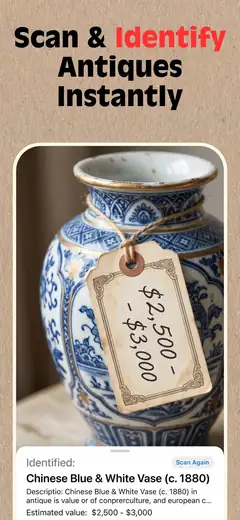
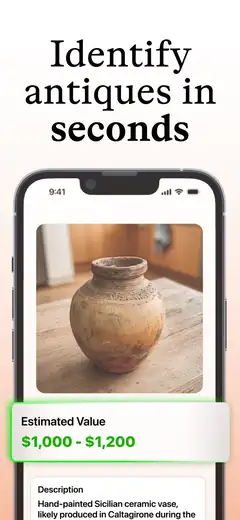
Antique Identifier TIQ is an iPhone antique identifier built around photo research. Its official site explains the core approach: photograph the complete object, add close views of marks or construction details, then review a likely identity, era clues, rough value range, comparable examples, and authenticity guidance. The App Store listing covers furniture, porcelain, silver, watches, jewelry, art, glass, tools, toys, and other common estate-sale categories.
TIQ comes first because it puts the main buying questions in one place. What is the object? What details could point to a reproduction? What comparable items might support the rough price? At $19.99 yearly, its published annual rate is at the low end of this list. The weekly rate is poor value if you need more than a short sorting session.
There is an obvious limit: TIQ had only 9 App Store ratings, compared with 31,460 for AntiqSnap, when checked in October 2026. It also needs iOS 18.0 and has no confirmed Android version. Those limits count, yet the price and combined identification, value, and authenticity research still put it first for most current-iPhone owners.
- Rough value ranges include comparable-example context.
- Authenticity guidance covers marks, materials, construction, and era clues.
- The $19.99 yearly price is clearly listed.
- TIQ is limited to recent iPhones and iPads.
- Results are research leads, not certified authentication or appraisal.
- Price
- Prices checked October 2026: $4.99 weekly or $19.99 yearly.
- Platforms
- iPhone and iPad with iOS 18.0 or later.
Pick Antique Identifier TIQ if you want one iPhone app for photo ID, rough value research, and reproduction clues at a published $19.99 yearly rate.
Antique Identifier TIQ antique identifier app for iPhoneAntique Identifier TIQ listing on AIACI

AntiqSnap
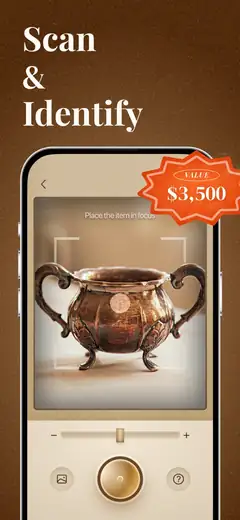
AntiqSnap identifies antiques from a photo, estimates value and rarity, and saves finds to a digital collection. Its collection view can track an estimated total value, which is useful when you're sorting a cabinet or inherited group instead of checking a single item. The listing names ceramics, glassware, furniture, silverware, and jewelry among its supported categories.
The store record is its biggest advantage. AntiqSnap had 4.68 stars from 31,460 US App Store ratings in October 2026, far more feedback than any other app on this list. It also works on iOS 16.0 and lists nine languages, so it reaches older devices and more readers than TIQ. For some buyers, that long rating record will settle the choice.
Price clarity is weaker. The app is free to download, but the available listing doesn't confirm the free scan allowance. Its purchase menu contains several $3.99, $29.99, and $39.99 Premium entries without consistently identifying each billing period. Check the purchase screen before starting a scan. AntiqSnap is a strong general-use pick, though its listing says less about reproduction checks than TIQ's listing does.
- Large US App Store rating base.
- Tracks saved finds and their combined estimated value.
- Works on iOS 16.0 and lists nine languages.
- The free scan allowance is unknown.
- The purchase menu does not map every price to a clear billing period.
- Price
- Prices checked October 2026: listed purchases range from $3.99 to $39.99; check the listing for billing periods.
- Platforms
- iPhone and iPad with iOS 16.0 or later.
Pick AntiqSnap if a large App Store feedback record and collection-level value tracking outweigh price-menu ambiguity.

Curio
Curio combines photo identification with maker, era, origin, and estimated-value information. Two details separate it from a basic scanner. You can add a maker's mark, signature, or pattern name to refine a result, and the app displays visually similar objects from the web so you can compare shapes and decoration yourself.
That workflow fits the kitchen-table moment when a full photo says only porcelain bowl, but the base has a readable factory stamp. Curio also saves identified pieces into collections and can export them as a PDF for family records. Its 33 listed languages are the broadest language selection in this group. The October 2026 US listing showed 4.82 stars from 16,809 ratings, the highest displayed score among these iPhone picks.
Curio is free to download, with a reported first-scan trial, but the exact continuing free allowance needs a listing check. The App Store purchase menu runs from $4.99 to $49.99 and contains several Premium options; it doesn't map every entry cleanly to a billing term. I'd choose Curio when marks, visual comparison, or PDF records carry more weight than having the lowest confirmed yearly price.
- Accepts added maker, signature, and pattern details.
- Displays visual matches for side-by-side research.
- Exports saved collections as PDFs.
- Continuing free-use limits are unclear.
- Several Premium prices appear in the purchase menu.
- Price
- Prices checked October 2026: purchases listed from $4.99 to $49.99; check the listing for the current plan.
- Platforms
- iPhone and iPad with iOS 16.4 or later.
Pick Curio if you frequently photograph hallmarks or want visual matches, 33 listed languages, and PDF collection exports.

Antique Identifier Zophi
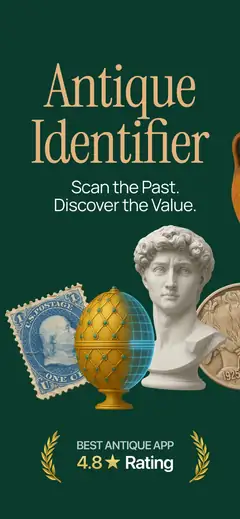
Antique Identifier Zophi is a general photo scanner for antiques and collectibles. Its listing covers objects such as vases, coins, stamps, and statuettes, then supplies a proposed identity, story, estimated value, and a place to save the item. It doesn't demand a recent phone: iOS 15.0 is the lowest system requirement among the dedicated photo apps in this guide.
Zophi had 4.79 stars from 10,949 US App Store ratings when checked in October 2026. That is a substantial store record, and its published subscription choices are easier to read than some rivals: weekly entries run from $3.99 to $4.99, while yearly entries run from $19.99 to $34.99. Your account may display a specific option within those ranges.
The tradeoff is research depth in the listing. Zophi says it identifies, values, supplies history, and saves finds, but the description doesn't explain which comparable sales support an estimate or how it handles reproduction clues. Only one language appears in the store data. I see Zophi as the compatibility pick: it gives an older iPhone access to the common antique identifier workflow without forcing an iOS 16 or iOS 18 update.
- Runs on iOS 15.0 or later.
- Strong App Store score from more than 10,000 ratings.
- Weekly and yearly price ranges are published.
- The listing gives limited detail about comparable-price evidence.
- Only one language is listed.
- Price
- Prices checked October 2026: $3.99 to $4.99 weekly and $19.99 to $34.99 yearly.
- Platforms
- iPhone and iPad with iOS 15.0 or later.
Pick Antique Identifier Zophi if your older iPhone can't run several of the newer apps here.

Relic
Relic turns a photo into an item record with a proposed identity, origin, era, materials, condition, value range, and brief history. The strongest part is its searchable catalog. Saved scans can be filtered by keyword, value, or time period, which suits a reseller processing boxes of mixed inventory instead of researching one family heirloom.
The developer's App Store description says Relic searches the web for similar items and previous sales. That is useful in theory for pricing stock, though the listing supplies no accuracy study and an AI result still needs a check against the underlying records. Relic had 4.72 stars from 7,810 US ratings in October 2026, works on iOS 16.4 or later, and lists 12 languages.
Budget for the subscription. Relic's listing explicitly says its AI identification, history, comparisons, and collection tools require payment. Purchases range from $3.99 to $79.99, with a $5.99 Pro Weekly entry and several unlimited-scan options whose terms vary. Relic beats simpler scanners on catalog filtering. I'd skip it for occasional curiosity, since there isn't a confirmed free AI tier.
- Searchable catalog supports keyword, value, and period filters.
- Item records include condition and materials.
- The listing refers to similar items and previous sales.
- AI tools require a subscription.
- Several unlimited-scan prices have different terms.
- Price
- Prices checked October 2026: purchases listed from $3.99 to $79.99; Pro Weekly is listed at $5.99.
- Platforms
- iPhone and iPad with iOS 16.4 or later.
Pick Relic if searchable inventory records are more useful to you than a free antique identifier app.

Collectibles.com

Collectibles.com reaches beyond traditional antiques. Its category list includes coins, stamps, watches, art, comics, video games, wine, sneakers, postcards, toys, and trading cards. The app scans items, supplies value information, tracks a collection, and adds profiles plus a collector community. That mix works well when your shelves hold sports cards beside old coins and vintage toys.
Its other advantage is age. The app first appeared in October 2020, years before most photo identifiers in this comparison, and had 4.63 stars from 9,932 US App Store ratings in October 2026. Market comparisons and collection tracking give collectors a reason to use it after the first scan. Community tools also set it apart from the more private, research-only apps above.
Antique specialists may find its scope too broad. The listing doesn't explain the antique-specific treatment of maker's marks, furniture construction, or reproduction signs in the same detail as TIQ or Curio. It also carries a 17+ age rating. Unlimited-plan purchases include monthly, yearly, and $99.99 lifetime entries, but multiple prices appear for each term. Check the checkout screen. This is my pick for varied collectibles, not focused furniture or porcelain research.
- Covers antiques, cards, coins, comics, toys, and other collections.
- Includes profiles, community tools, and collection tracking.
- Has an App Store history dating to 2020.
- Less focused on antique-specific marks and construction clues.
- Exact free scanning limits are unknown.
- Price
- Prices checked October 2026: listed unlimited options run from $2.99 monthly to $99.99 lifetime; current terms vary.
- Platforms
- iPhone and iPad with iOS 16.6 or later; age rating 17+.
Pick Collectibles.com if you want one catalog for antiques, trading cards, coins, toys, and other collectible categories.
WorthPoint
WorthPoint enters the process after you have a candidate identity. It is a web price-guide database centered on historical sold listings and comparable market records. Search the suspected maker, pattern, material, or model, then compare your object with past listings. For a reseller who already knows what an item is, those records can be more useful than another AI-generated estimate.
That difference earns WorthPoint a place here. A photo app may suggest that a vase came from a certain factory; WorthPoint can help you examine how similar attributed pieces were described and priced. This still takes judgment. Condition, dimensions, provenance, restoration, auction fees, and the date of sale can change what a comparable record means for your object.
WorthPoint isn't the first download I'd recommend to someone staring at an unidentified tool or unmarked figurine. Start with a photo identifier, then use sold-price research once you have useful search terms. Current free access and subscription pricing were not confirmed in the available source material, so check the site before registering. Pick WorthPoint when the identity is largely settled and your main question is what comparable objects have sold for.
- Searches historical market and sold-listing records.
- Useful after a maker, pattern, or model has been identified.
- Better suited to detailed price research than a one-number estimate.
- It is a research database, with photo identification outside its main role.
- Current free access and prices require a site check.
- Price
- Price checked October 2026: check current WorthPoint plans.
- Platforms
- Web.
Pick WorthPoint if you already know the likely item and need historical sold-price evidence.
Antique Identifier TIQ vs AntiqSnap
TIQ and AntiqSnap cover the same basic moment: you photograph an unfamiliar object and want an identity plus a rough value. The deciding differences are published price, device support, language selection, and the kind of follow-up information each listing describes.
| Point | Antique Identifier TIQ | Rival |
|---|---|---|
| Core result | Likely identity, era clues, rough value range, comparable examples, and authenticity guidance | Identity, history, rarity, estimated value, and saved collection record |
| Published purchase menu | $4.99 weekly or $19.99 yearly | $3.99 to $39.99 Premium entries; billing periods require a listing check |
| Device requirement | iOS 18.0 or later | iOS 16.0 or later |
| Languages in store data | No language count shown in the supplied store record | Nine languages listed |
| Collection use | Saves identification research | Saves finds and tracks their combined estimated value |
TIQ is my choice for most people with a current iPhone. Its yearly price is explicit, and the authenticity section prompts you to inspect materials, maker marks, construction, and signs associated with reproductions.
AntiqSnap wins if you have an iPhone stuck on iOS 16, need one of its nine listed languages, or want a running estimated total for a collection. Those are meaningful advantages. Check AntiqSnap's purchase screen first because the public menu doesn't fully explain its billing periods.
How to choose an antique identifier app
Look for evidence behind the estimate
An unexplained $400 estimate isn't enough to support a purchase. Look for comparable objects, listing photos, maker information, and dates. Also check whether the records are completed sales or current asking prices; they answer different questions. Curio says it displays similar objects, TIQ supplies comparable examples, and WorthPoint focuses on historical market records. Compare dimensions and condition before using any number.
Match the app to the object
Broad coverage sounds useful until you need a tiny hallmark read from silver or a furniture joint placed in the correct period. Review the listed categories before subscribing. TIQ names furniture, ceramics, silver, watches, jewelry, art, and glass among its categories. Collectibles.com is a better fit when cards, comics, sneakers, and toys share space with antiques.
Check the photo and mark workflow
One full-object photo can miss the evidence that identifies a piece. You may need the underside, signature, label, clasp, joint, seam, or damaged area. Curio accepts added mark and pattern details, while TIQ's guidance calls for full views plus close photos. At a flea market, take those detail shots before an object is wrapped or returned to a crowded shelf.
Read the paywall before scanning
Free download is not a promise of free identification. Several apps here don't publish an exact free scan allowance, and Relic says its AI tools require payment. Compare the renewal period as well as the first price shown. TIQ's $19.99 yearly plan costs far less than paying its $4.99 weekly rate for a full year; other apps list several Premium prices with unclear terms.
Know when an app result is insufficient
No listing in this guide supplies an independently confirmed accuracy rate. Photos may also miss weight, repairs, replaced parts, odors, hidden marks, or how materials respond to physical examination. Use an app to form search terms and find possible comparables. For insurance, probate, estate division, taxes, suspected fraud, or a costly purchase, get the object examined by a qualified human appraiser.
Frequently asked questions
How do I choose an antique identifier app?
Choose an app that supports your object category and device, then compare its photo and mark workflow, estimate evidence, collection tools, and price terms. Favor results with maker details, dates, dimensions, condition, and comparable records over an unexplained value.
Are free antique identifier apps good enough, or should I pay?
No pick in this guide has a confirmed unlimited free tier, and a free download may still have scan limits or require a subscription. Relic requires payment for AI identification, while several other apps have unclear free scan allowances.
How accurate are antique identifier apps?
No listing in this guide provides an independently confirmed accuracy rate. Check each proposed identity against marks, measurements, condition, and comparable records.
Can I use an antique identifier app offline, and are my photos private?
The guide did not confirm offline support or document how any pick handles uploaded photos. Offline access and on-device photo processing should be treated as unconfirmed.
Are antique identifier apps available for Android and iPhone?
This guide confirmed iPhone and iPad support for the six photo apps, but no Google Play listing, so none is labeled as an Android app. Antique Identifier Zophi supports iOS 15.0 or later, the lowest iOS requirement among them.
Which antique app is best for maker's marks, inventory, or sold prices?
Curio fits maker's marks and visual matches, Relic is built for searchable reseller inventory, and WorthPoint focuses on historical sold-price research after you have a likely identity.
How does an antique identifier app work?
You photograph an object, and the app proposes an identity, era, materials, value range, or comparable items based on the image. Full-object photos plus close-ups of marks, labels, joints, seams, signatures, and damage can provide more evidence.
The final pick
Start with Antique Identifier TIQ if you have an iPhone running iOS 18. Its mix of photo identification, rough value ranges, comparable examples, and authenticity clues covers the questions most buyers ask, while the $19.99 yearly price is plainly published.