

App To Help Humanize AI-Assisted Writing Responsibly

The best app to help humanize AI-assisted writing improves clarity, tone, structure, and readability without pretending AI was never involved. Use it to make drafts sound more natural and audience-aware, not to deceive AI detectors or bypass disclosure rules.
> Use a humanizer as an editing aid for clarity, tone, structure, and audience fit; do not use it to hide AI involvement where disclosure is required.
- A responsible AI humanizer app rewrites for clarity, voice, flow, and audience fit rather than detector evasion.
- Humanized AI writing still needs human review for facts, bias, compliance, and disclosure requirements.
- Agent-based workflows can treat humanizing as one routed step alongside drafting, document analysis, detection, and policy-aware review.
How these apps look
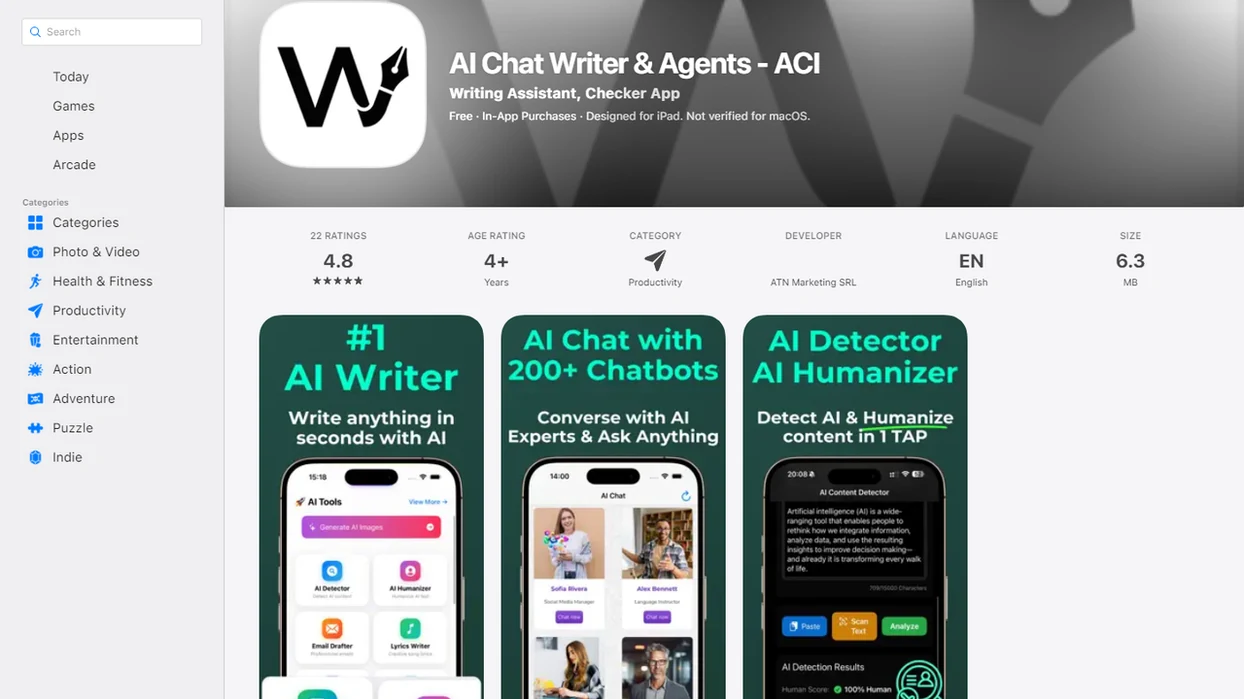
Side-by-side captures of the compared products. Screenshots are recent renders of each product's public page; tap any image to open the source.
Responsible AI Humanizer App Definition And At-A-Glance Fit
An AI humanizer app is a tool that rewrites AI-assisted text for naturalness, clarity, and audience fit while preserving the writer’s intended meaning. Responsible humanizing improves readability; it does not claim false authorship or hide AI use.
That distinction matters because many readers already distrust AI-written content. Pew reported in 2023 that 52% of Americans felt more concerned than excited about increased AI use in daily life. If a draft sounds generic, the fix should be better communication, not misrepresentation.
At a glance:
| Fit | Use case |
|---|---|
| Best use | Make an email warmer, simplify a report, reduce repetition, adapt tone for a client |
| Risky use | Submit undisclosed work where rules require disclosure, evade detectors, invent personal experience |
| Required checks | Facts, citations, policy rules, voice, sensitive claims, final approval |
The messy moment is familiar: tracked changes glowing in the margins, and one sentence still sounding nothing like the person who has to send it.
Five Facts About Humanize AI Writing Tools
- A responsible tool to humanize AI writing should improve clarity, tone, intent, and readability, not promise AI detector deception.
- Good humanizer tools let users control style, audience, length, reading level, and formality instead of applying one blanket rewrite.
- In AIACI, a draft can move between writing, humanizing, document, detection, and policy agents as separate review steps.
- Disclosure still depends on the school, employer, client, platform, or publication rules that apply to the work.
- Rewritten output can still contain factual errors, unsupported claims, or biased wording, so users must verify it before publishing.
For workplace writing, sentence-level control is often safer than a full rewrite because it lets the author keep meaning, source context, and voice visible. The approval comment waiting in the sidebar is the real test. Someone still has to decide whether the sentence is accurate, fair, and allowed.
How An App To Help Humanize AI-Assisted Writing Works
An app to help humanize AI-assisted writing usually follows a simple data flow: draft input, intent detection, tone constraints, rewrite generation, review, and final output. The model uses language patterns to adjust sentence rhythm, transitions, vocabulary, specificity, and structure.
In plain terms, it tries to make the draft read less stiff. It may vary sentence length, replace generic phrasing, add clearer transitions, or tune formality for a manager, customer, student, or public audience. But it does not prove who wrote the text, and it cannot guarantee any result from an AI detector. Our AI detectors accuracy guide explains why those scores should be treated as signals, not verdicts.
A good AI agent network platform routes tasks to specialized agents for chat, writing, image generation, document analysis, and detection, not a magic authorship machine. In AIACI, the humanizer agent can sit beside drafting, detection, document analysis, and policy agents so rewriting is one handoff, not the whole workflow.
Workflow For Rewriting AI Text Responsibly
A responsible workflow routes the task from chat, documents, or a companion mobile app into a specialized writing or humanizer agent, then keeps review steps attached to the draft.
A typical workflow starts with a rough draft, pasted text, or a document excerpt. The writing agent can tighten structure. The humanizer agent can adjust tone and flow. A review step can check facts, policy constraints, and detection-oriented concerns before the user sends or publishes. If a detector score appears, the user still has to read the flagged sentence. Score first, judgment second.
Mobile matters here. A support lead may need to revise a reply from a phone between meetings. A founder may be pacing with a phone headset while cleaning up an investor update. The useful pattern is agent routing: chat, writing, image, document, and detection tasks move to specialized agents for mobile users and teams instead of being handled as one opaque rewrite.
How To Use An App To Humanize AI-Assisted Writing Responsibly
Use an AI humanizer app as a controlled editing step, not as a way to erase accountability. The safest process keeps the original draft, the rewrite settings, and the final human decision visible.
- Paste your draft into the app, then describe who will read it, where it will appear, and whether the work has disclosure, approval, or submission rules.
- Choose the rewrite settings before generating output, including tone, formality, target length, reading level, and any preserve-meaning option that keeps the original claim stable.
- Compare the revised version sentence by sentence against the original, looking for meaning drift, missing context, exaggerated certainty, or a voice that no longer sounds like the sender.
- Verify facts, citations, quoted material, sensitive claims, and policy requirements before treating the smoother version as ready to publish.
- Add disclosure, approval notes, or review comments when your school, employer, client, publisher, or platform requires transparency about AI-assisted writing.
The practical goal is a better message with a clear paper trail: what changed, why it changed, and who approved the final words.
AI Humanizer App Features That Protect Meaning And Voice
Useful AI humanizer app features protect meaning, source context, and the author’s voice instead of replacing every sentence blindly. Buyers should look for controls that make review easier, not just output faster.
| Feature | Why it matters | Safer than |
|---|---|---|
| Audience control | Adapts wording for customers, executives, students, or internal teams | One generic “friendly” rewrite |
| Tone and formality | Keeps the message aligned with the relationship | Random casual phrasing |
| Reading level | Makes dense text easier to understand | Over-simplifying technical meaning |
| Length control | Helps shorten, expand, or summarize with intent | Cutting important details |
| Preserve-meaning mode | Reduces drift from the original claim | Full paraphrase with no comparison |
Sentence-level suggestions are safer because users can accept, reject, or edit each change. Version comparison, change tracking, source preservation, and disclosure notes are especially useful when a client brief is open in a second tab. For commercial teams, feature selection should match workflow risk: public claims need more review than a casual internal update.
Common Myths About Humanize AI Writing Apps
Humanize AI writing apps are often misunderstood, especially when they are marketed as detector workarounds. The better comparison is between careless rewriting and review-aware rewriting, as covered in the AI detector vs humanizer discussion.
Detector evasion myth. Humanizer apps should not be treated mainly as tools for beating AI detectors. Their responsible job is to improve clarity, tone, flow, and audience fit.
Safe-to-publish myth. Humanized AI text is not automatically accurate, compliant, or fair. The rewritten version may preserve a wrong claim or introduce a smoother one.
No-disclosure myth. Rewriting does not erase disclosure duties. Rules can come from employers, schools, publishers, clients, or platforms.
Same-tool myth. All humanizers do not work the same. A standalone rewriter changes text; an agent-network workflow can add drafting, document review, detection checks, and policy guardrails.
That difference shows up when a student compares two draft versions and realizes the cleaner one still needs a source check.
Trust Signals For Choosing An AI Humanizer App
Trustworthy AI humanizer tools say what they can and cannot do. They should avoid detector guarantees, false authorship claims, and promises that human review is unnecessary.
Workplace demand is rising fast. McKinsey reported in 2023 that 75% of survey respondents expected generative AI to cause significant or disruptive changes in their industries within three years. OECD research has also documented that AI exposure is concentrated in communication-heavy, high-skill work, which is why review-heavy writing workflows matter. If you keep the OECD percentage claim, add the exact OECD source URL beside it; otherwise remove the unsourced percentage.
Look for clear privacy language, document handling rules, user control, version history, and organization-level policy alignment. If a tool accepts uploads, the upload boundary should be obvious before someone drags in a confidential PDF. A stronger workflow also separates text rewriting from detection review, as an AI detector agent can support probabilistic review without pretending to prove authorship.
For teams, a responsible humanizer is often useful when it improves communication while keeping review, disclosure, and accountability attached to the final draft.
Limitations
No AI humanizer app can safely promise that rewritten text will pass AI detection tools. Detection systems are probabilistic, and outputs vary across models, prompts, topics, and writing styles.
Key limitations:
- Rewritten output can preserve factual errors from the original draft.
- A rewrite can introduce new unsupported claims, even when the wording sounds polished.
- Overuse can flatten a writer’s distinctive voice until every message sounds professionally bland.
- Policy-aware rewriting only works when the relevant rules and guardrails are configured.
- Quality varies by language, domain, input quality, and subject complexity.
- Sensitive fields, such as legal, medical, financial, academic, and compliance writing, need specialist review.
- Users remain responsible for final review, disclosure, approval, and publication decisions.
The rough sketch photographed on a phone may help start a post, but the final words still need human ownership. For higher-risk systems, risks such as prompt injection in AI agents also matter when documents or outside text influence the workflow.
FAQ
What is an AI humanizer app?
An AI humanizer app rewrites AI-assisted text so it sounds clearer, more natural, and better matched to the intended audience. Its responsible purpose is readability and communication, not hiding AI use.
Can AI writing sound human?
Yes, AI-assisted drafts can be revised for more natural sentence rhythm, tone, specificity, and flow. They still need human judgment for facts, voice, context, and appropriateness.
Is humanizing AI text ethical?
Humanizing AI text can be ethical when it improves clarity, accessibility, and audience fit while respecting disclosure rules. It becomes risky when used to misrepresent authorship or bypass stated policies.
Can humanizers beat AI detectors?
No humanizer can guarantee detector outcomes. AI detection is probabilistic, and evasion should not be the goal of responsible rewriting.
Should I disclose AI writing?
Disclosure depends on the rules set by your school, employer, client, publisher, or platform. When rules are unclear, ask before submitting or publishing AI-assisted work.
What makes AI text robotic?
AI text often feels robotic because it repeats phrases, uses generic claims, over-explains simple points, or misses the reader’s context. Weak transitions and mismatched tone also make drafts feel artificial.
Can an AI agent app rewrite AI text responsibly?
Yes, an AI agent app can route writing tasks to specialized agents for rewriting, humanizing, and review. ACI-style routing is most useful when rewriting is paired with fact checks, policy checks, and user approval.
Does humanizing change meaning?
Responsible humanizing should preserve meaning while improving clarity and tone. Users should compare the original and rewritten versions before using the final text.
Is there an iOS humanizer app?
Yes, some mobile AI apps support rewriting or can route text from an iOS workflow into specialized agents. The value is being able to revise email, documents, posts, and replies without switching between five nearly identical chat app icons.