

Why ChatGPT Text Gets Flagged
ChatGPT output carries statistical fingerprints that detectors recognize. Low perplexity-predictable word choices-is the main signal. Human writing has more randomness; ChatGPT smooths it into grammatically perfect, rhythmically uniform text that reads well but signals "machine." No humanizer guarantees 100% bypass. Detectors update regularly to catch new techniques.
Burstiness matters too. Humans mix long and short sentences. ChatGPT stays in a narrow band. GPTZero and Originality.ai measure these patterns and assign scores. To pass, you must break the patterns they look for.
How the Humanizer Works
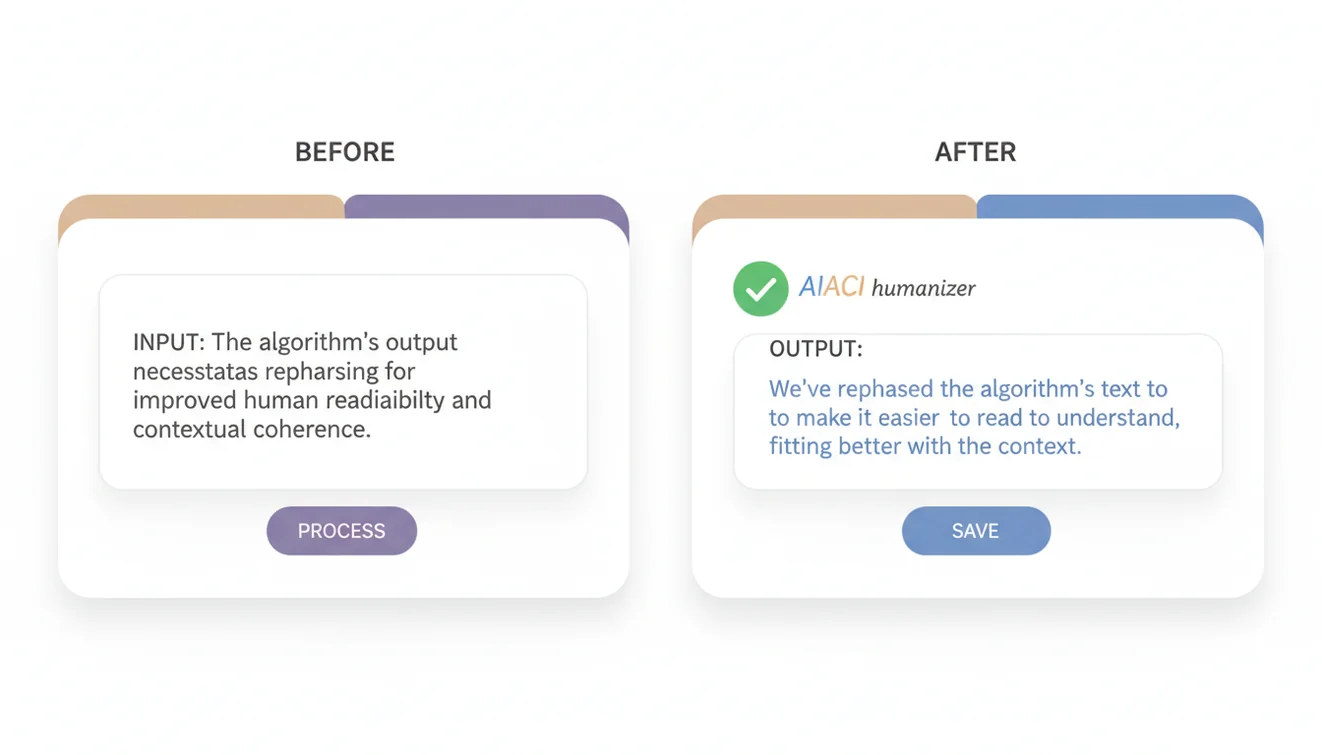
Paste your ChatGPT output into the tool above. The agent scans for machine signatures: uniform rhythm, overused transitions ("furthermore," "additionally"), predictable structure, flat vocabulary. It rewrites to add natural variation-irregular sentence lengths, conversational asides, varied punctuation, word choices outside ChatGPT's comfort zone.
This is not a synonym spinner. Cheap tools swap words without touching what detectors measure. The AIACI humanizer targets the statistical patterns that flag AI text. It restructures at sentence and paragraph level, not just word level.
Step-by-Step Process
Generate content with ChatGPT as usual. Focus on content first. Paste into the humanizer and click "Humanize Text." The AI rewrites with natural variation while preserving meaning. Read the output yourself-the humanizer handles patterns; your voice makes it truly undetectable. Add examples, adjust tone, cut generic phrasing.
Run humanized text through the AI Detector before publishing. If sections still flag, rewrite manually or re-run them. Automated humanization plus human editing yields the most consistent results.

Why Detection Matters
AI detection is a gatekeeper. Schools use Turnitin and GPTZero on submissions. Publishers screen freelance work. Google deprioritizes AI text that lacks experience and expertise. Flagged content faces real consequences: rejected work, terminated contracts, lower rankings.
Humanization exists because AI writing is part of workflows. Teams use AI Chat and AI Writer to draft at scale. Students use ChatGPT for research. Professionals use it for emails and reports. Humanization bridges AI efficiency and the authenticity standards institutions enforce.
Ethics and Disclosure
Polishing AI-assisted business content with a humanizer is standard-like hiring an editor or using Grammarly. Academic use is the gray area. Most schools require AI disclosure and prohibit submitting AI work as your own. A humanizer changes detectability, not policy. If your school bans AI assistance, hiding it is dishonest. If your job cares about output, not method, humanizing is workflow optimization. AIACI provides the tool; responsibility is yours.
Limitations and Safety
No humanizer beats every detector every time. Models retrain on new data, including humanized text. It is an arms race. What passes today may not pass next month. Text under 100 words is harder-not enough material for variation. Highly technical content can produce awkward output. The humanizer preserves meaning but changes phrasing; verify exact quotes and data. The AI Humanizer page offers a dedicated interface with more best-practice context.
Staying Ahead of Detectors
Detectors retrain every few weeks on fresh data. A technique that dropped your score to 5% in January might register 30% by March. Do not rely on a single pass tested months ago. Re-check content periodically with the AI Detector, vary your approach between projects, and treat evasion as ongoing, not one-time.
AI Humanizer App
The AIACI humanizer is free on the web with unlimited requests. Paste, humanize, copy. Open AI Chat for unlimited humanization on the go.