The Starting Point for Agent Interaction
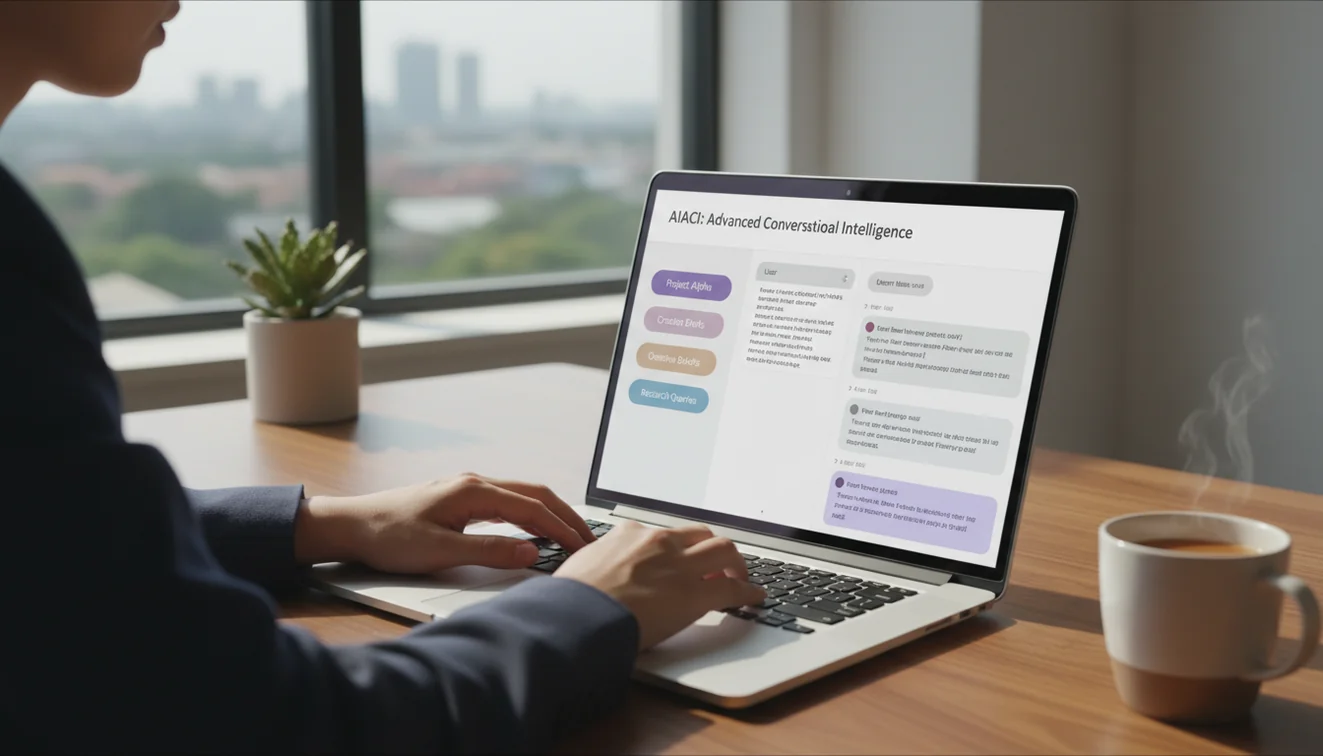
Chatting to an AI is the simplest form of agent interaction. You provide natural-language input. The agent interprets your intent, selects an execution path, and returns structured output. No configuration, no menus, no learning curve. If you can describe what you need in a sentence, the agent can begin working on it. This is the entry point for people who have not used AI agents before - and the foundation for those who will use them extensively.
The gap between "I've never used AI" and "I use AI agents to run parts of my workflow" is smaller than most people expect. It starts with a single message. The agent does the rest: parsing intent, organizing output, and delivering a result you can act on immediately. The output may contain errors or oversimplifications - this is inherent to all language-model-based systems - but the speed from question to usable answer is what makes the interaction valuable.

From Single Messages to Compound Tasks
Most people start by asking a question: "What is the difference between TCP and UDP?" or "Write a thank-you email to a client." These single-turn interactions are useful on their own. The real value emerges when you chain them. Ask the agent to draft something, then ask it to shorten the result, then ask it to adjust the tone for a different audience. Each message builds on the last within the session.
This is how agent-assisted workflows begin. You do not need to plan the workflow in advance. It develops organically through conversation. The agent tracks context across messages and adapts its output based on your iterative feedback. Over time, you learn which instructions produce the best results and your interaction becomes more efficient. The AI Chat Assistant extends this pattern with task-focused optimizations.
Who This Is For
Anyone encountering AI agents for the first time. Students exploring how AI can support their coursework. Professionals testing whether AI-generated drafts save time in their workflow. Small business owners who need marketing copy but do not have a content team. The common thread is low barrier to entry: no account creation, no payment, no prior experience required. You type, the agent responds.
Experienced users also benefit. Chatting to an AI agent serves as a rapid prototyping tool - test an idea, evaluate the output, iterate. The AI Writer and Text Generator handle specialized output formats, but for general-purpose exploration, this is where you start.
Limitations of Conversational AI Agents
The agent generates text based on statistical patterns, not verified knowledge. It will produce incorrect facts, fabricate references, and state uncertain things with high confidence. This is a structural property of language models, not a fixable bug. On well-documented topics, accuracy is high. On niche, recent, or ambiguous subjects, reliability drops. Verify anything consequential.
Other constraints: no internet access, no real-time data, no memory between sessions, and biases inherited from training data. The agent cannot access your files, your email, or your internal systems. AIACI does not require accounts or retain conversation data, but exercise standard caution - do not submit passwords, financial credentials, or proprietary business information through any AI interface.