

What Native Language Agent Processing Means
Chat IA is a multilingual agent that operates natively across languages. When you type in Spanish, the agent does not translate your input to English, process it, and translate back. It reasons directly within Spanish-trained model parameters-vocabulary, syntax, idioms, and cultural patterns specific to that language. This distinction matters because translation-based approaches lose nuance at each conversion step. Native processing preserves it.
The agent detects your input language automatically within the first few tokens. No configuration required. Once detected, the entire reasoning pipeline executes within that language's model space. Output reflects native phrasing patterns rather than translated constructions. Performance is strongest for high-resource languages; lower-resource languages may show reduced fluency on specialized topics.
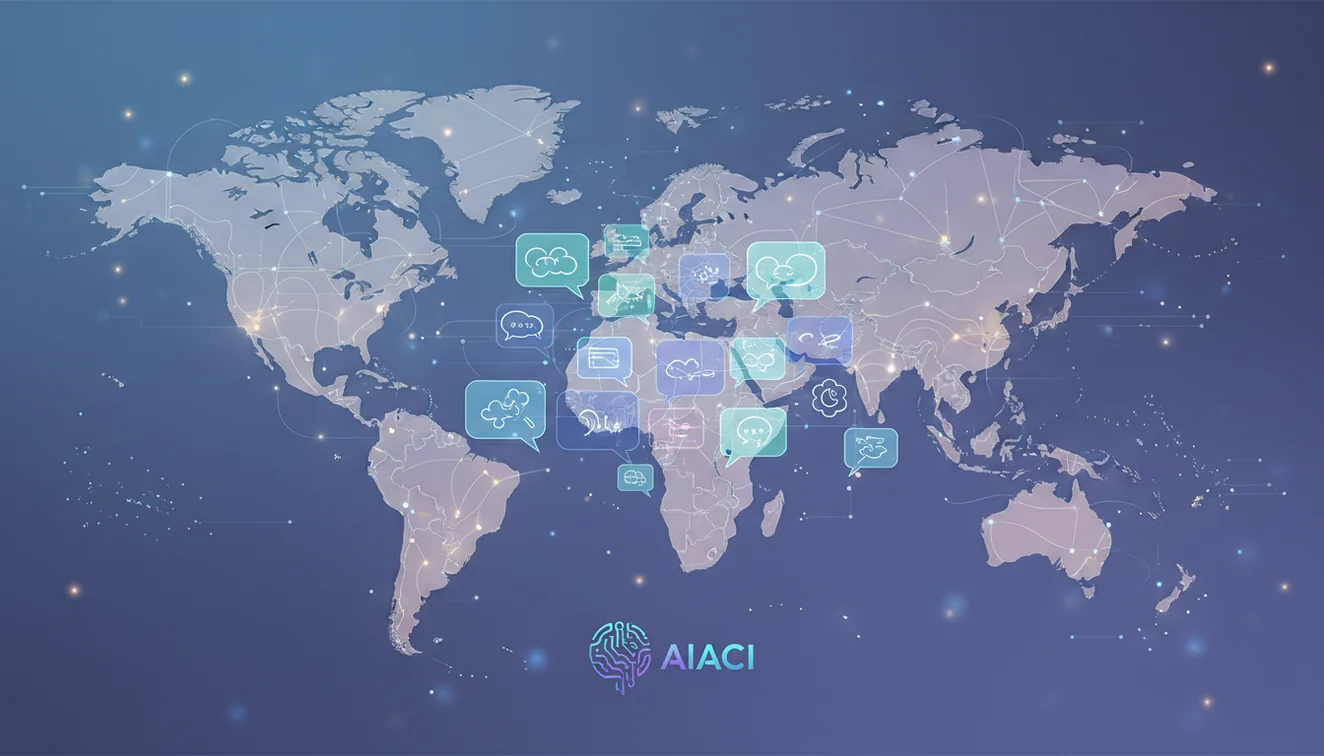
How the Multilingual Agent Operates
The agent runs on transformer architectures trained across multilingual corpora. Each language occupies a distinct region of the model's parameter space. When the agent detects Spanish input, it activates Spanish-specific attention patterns, vocabulary distributions, and syntactic structures. The result is output that reads as if produced by a Spanish-reasoning system, not an English system wearing a Spanish mask.
Cross-language context retention is built into the agent's session handling. Switch from English to French mid-conversation and the agent carries forward all prior context while shifting its reasoning to French model space. This supports real multilingual workflows-not sequential monolingual interactions. The agent handles code-switching naturally, recognizing mixed-language input common among bilingual users.
Agent Workflow for Multilingual Tasks
The Chat IA agent fits into structured workflows that require language-native output. Content teams use it to generate marketing copy that reads naturally in each target market-not localized translations but native drafts. Research teams process foreign-language sources by querying the agent in the source language, extracting insights without the distortion of intermediate translation.
Bilingual professionals use the agent for cross-language email drafting, meeting note conversion, and document adaptation. The agent understands register differences-formal Spanish for a business proposal, conversational Portuguese for a social post. Specifying the register in your prompt improves output alignment. AI Chat provides the same underlying models for English-primary workflows. ChatPDF pairs with Chat IA for multilingual document analysis.

Language Coverage and Performance Tiers
Not all languages perform equally. English has the largest training data volume and produces the most consistent output. Spanish, French, German, and Portuguese form a strong second tier with near-native fluency for general tasks. Chinese, Japanese, Korean, and Arabic perform well for standard communication but may lose precision on formal registers, honorifics, or domain-specific terminology.
Languages with smaller digital footprints-regional dialects, indigenous languages, and low-resource languages-receive less consistent coverage. The agent may generate grammatically acceptable but culturally flat output in these cases. For professional use in any language, treat the agent's output as a working draft and verify with a native speaker. This applies especially to regulated content in legal, medical, or financial domains.
Limitations of Multilingual Agent Reasoning
The agent inherits standard limitations of large language models: factual errors, knowledge cutoffs, and biases present in training data. These limitations can be amplified in lower-resource languages where training data is less diverse and less verified. Cultural nuance is difficult even for native speakers; the agent may default to neutral registers when a regional variant would be more appropriate.
Mixed-script input (combining Latin, Cyrillic, and CJK characters in one message) may cause detection ambiguity. The agent resolves this by dominant-language detection, which is usually correct but not guaranteed. AIACI does not require accounts or store conversations permanently. Daily usage limits apply on the web; the same tools stay available in the browser. Avoid sharing sensitive data in any AI interface regardless of language.
Language Learning with the Agent
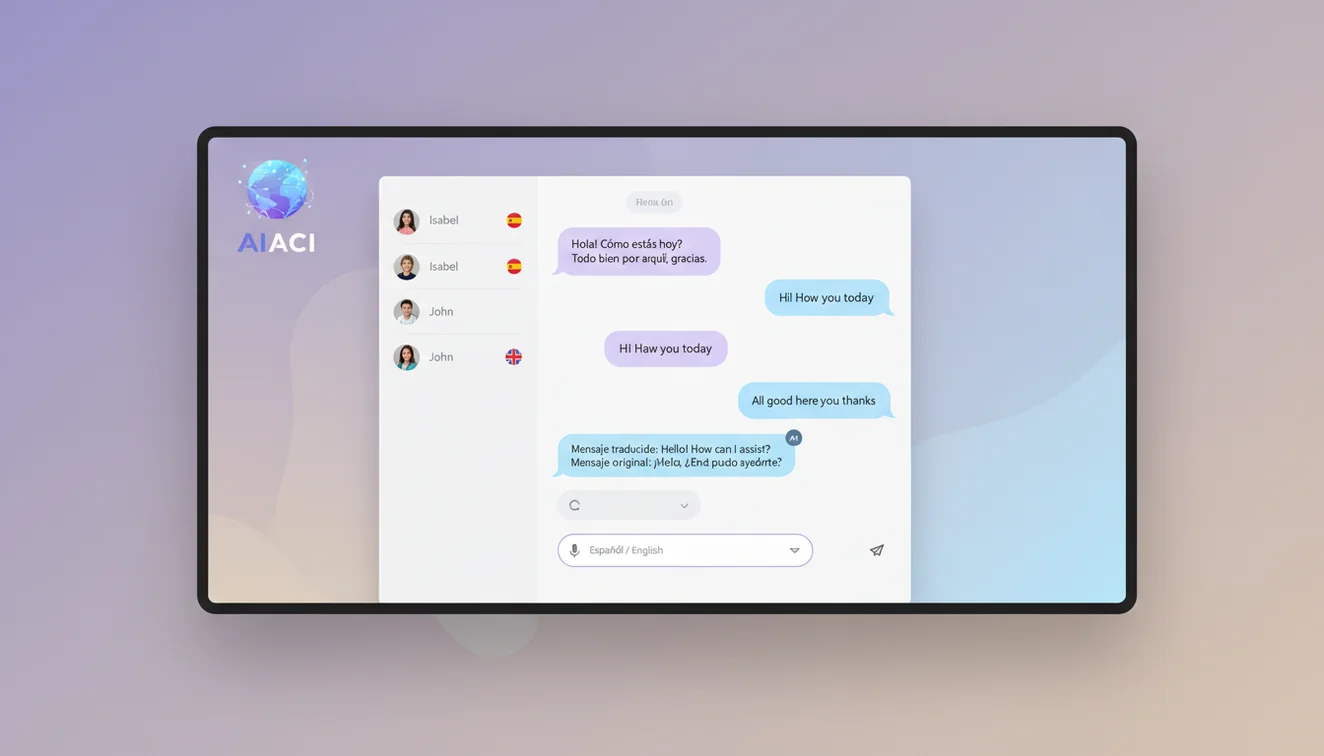
The Chat IA agent supports structured language practice workflows. Request grammar corrections in real time, ask for vocabulary alternatives at a specific proficiency level, or practice conversation with the agent responding only in your target language. The agent adapts difficulty based on instruction-tell it your level and it calibrates complexity accordingly.
This does not replace formal language instruction. The agent cannot assess pronunciation, does not follow standardized curricula, and may reinforce non-standard usage if not prompted carefully. It works best as a supplementary practice tool for building conversational fluency and written confidence between structured learning sessions.
Chat IA on Mobile
AIACI is available on web. Open AI Chat for multilingual agent workflows on mobile.