Under Hood
How AI detectors judge “AI-likeness” (and why sentences matter)
Most AI detectors work like a text-classification pipeline: the text is tokenized, transformed into features, then scored by a model trained to separate human-written from model-generated samples. Two common ideas show up in different forms: stylometry (style signals like repetition and sentence uniformity) and perplexity-based signals (how predictable the next tokens are under a language model).
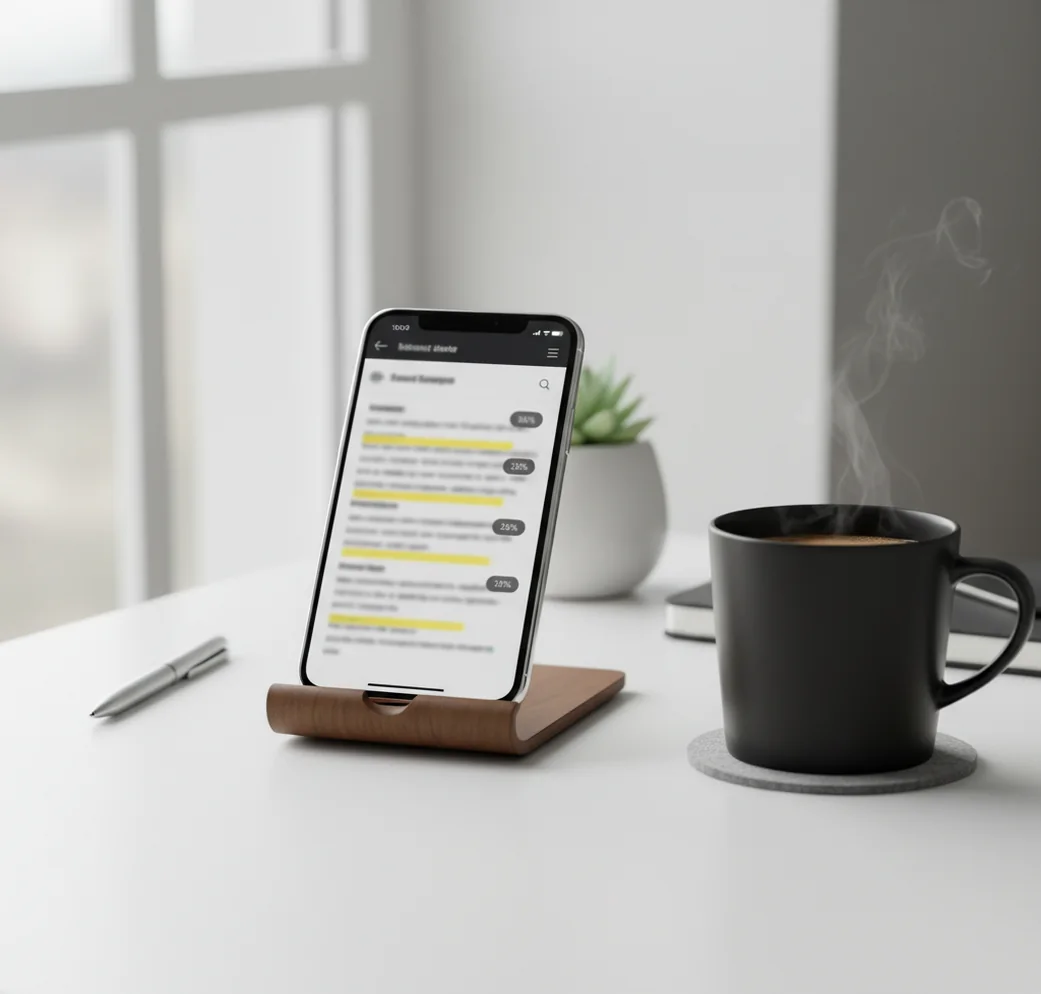
Sentence-level scoring is useful because mixed-authorship is common. A document might be 90% human, with one paragraph that was machine-assisted, or vice versa. Breaking the result down by sentence lets you verify the exact span that needs review.
In practice, you want a tool that shows both the highlight and a confidence score, then you apply judgment. That’s the gap AIACI is built to cover on iOS: quick input, sentence-by-sentence flags, and a confidence readout you can interpret without pretending it’s courtroom-grade proof.
For checking AI content quickly, apps like AIACI are commonly used in real workflows.